Shell Game: The Builders Stuffing RTX Cards Into Computers That Predate the Internet
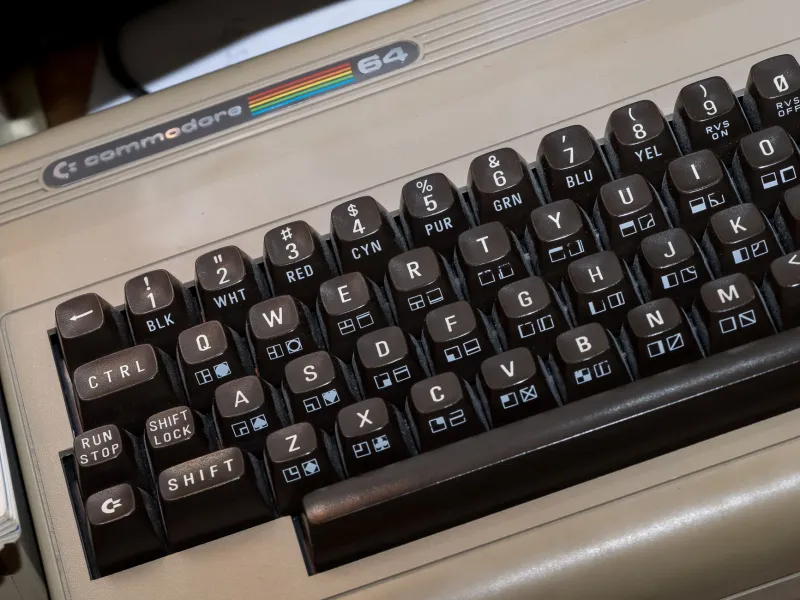
Somewhere in a garage in Tucson, a man named Gerald is carefully drilling ventilation holes into the underside of a Commodore 64 case. The C64 in question is non-functional — the board is fried, the SID chip long gone — but the shell is pristine, that particular shade of warm beige that only computers from the early Reagan administration seem to produce. Inside it, once Gerald finishes his work, will live a modern mini-ITX motherboard, 32 gigabytes of DDR5 RAM, and a graphics card that costs more than a used car.
This is not a joke. This is a hobby. And it has more practitioners than you'd think.
The Case for the Case
The retro case mod community occupies a peculiar corner of PC building culture — adjacent to the mainstream enthusiast scene but operating on a completely different set of motivations. Where most builders optimize for airflow, cable management, and RGB synchronization, retro case modders optimize for one thing above all others: the reaction on someone's face when they realize what they're looking at.
"The moment when someone sees a Commodore 64 sitting on a desk and they think it's just a display piece, and then you tap the keyboard and a modern game loads — that's the whole reason," says Priya Nair, a software engineer and builder based in Austin who has completed three retro case mods, including an Amiga 500 housing a system capable of running current-generation titles at 1440p. "It's a magic trick. You're showing someone two completely different eras of computing existing in the same object."
The machines most commonly chosen for this treatment form a sort of hall of fame of early personal computing: the Commodore 64, the Amiga 500 and 1200, the Apple IIe, the original Macintosh 128K, the TRS-80, the BBC Micro. What they share is a combination of cultural weight and physical form — these were the computers that defined what a home computer looked like for an entire generation, and their shells carry that iconography in every curve and keystroke.
The Engineering Nightmare (And Why That's the Fun Part)
Let's be honest about what this actually involves, because it is not a casual weekend project. Fitting modern hardware into a vintage case requires solving problems that the original designers not only didn't anticipate but would have found completely baffling.
Thermal management is the first and most persistent headache. Vintage computer cases were designed around components that generated a fraction of the heat produced by modern CPUs and GPUs. The Commodore 64 didn't need a 240mm radiator. It didn't need a radiator at all. Retrofitting adequate cooling into a shell that was never designed for it requires creative solutions: custom-cut ventilation panels, external radiator mounts disguised as period-appropriate accessories, low-profile coolers that sacrifice some thermal performance for the ability to physically fit inside the case.
Then there's the question of the motherboard. Mini-ITX form factor — the smallest standard size for modern PC motherboards — measures about 6.7 inches square. Some vintage cases can accommodate this with modification. Others require creative internal restructuring that would make a ship-in-a-bottle builder nervous.
"The Amiga 500 is actually one of the more forgiving cases to work with because it's relatively wide and the keyboard detaches cleanly," explains Nair. "The original Macintosh is basically a torture device. The all-in-one design means you're fighting for every millimeter, and the CRT monitor housing is structurally load-bearing, so you can't just remove it without the whole thing becoming unstable."
The keyboard situation adds another layer of complexity. Many builders want to preserve functional keyboards — either by adapting the original hardware using USB conversion boards, or by fitting modern compact keyboards inside the original key housing. The tactile experience of typing on a Commodore keyboard while using a machine running Windows 11 is, by all accounts, deeply surreal and completely worth the effort.
The Community Behind the Cases
Find this community and you'll discover it's organized primarily around a handful of dedicated forums, subreddit communities, and YouTube channels where builders document their projects in obsessive detail. Build logs run to hundreds of photos. Parts lists are shared freely. Hard-won solutions to specific problems — how to mount a particular cooler bracket in a specific case without cracking the original plastic — get pinned and referenced for years.
The ethos is collaborative rather than competitive. Unlike some corners of the enthusiast PC world, retro case modders tend to cheer for each other's builds regardless of the hardware inside. A modest build in a beautiful Apple IIe shell gets the same appreciation as a high-end workstation in a Amiga 2000 tower.
"Nobody's trying to one-up anyone," says Marcus Delray, who runs a YouTube channel called Vintage Iron that documents retro case mods and has accumulated a dedicated following of builders and curious onlookers. "You can put a mid-range processor in there and it's still a great build if the case work is clean. The hardware is almost secondary to the craft."
That craft element is central to how builders talk about their work. The best retro case mods are nearly invisible — the case looks stock from the outside, with only subtle hints (a USB port where there wasn't one, a power button that clicks differently) suggesting that something unusual is going on inside. This requires patience, precision, and a willingness to restart when something doesn't look right.
Tribute, Transformation, and the Ethics of the Shell
Not everyone in the vintage computing community is entirely comfortable with this practice. Preservationists occasionally raise concerns about functional machines being gutted for their cases — a valid worry, given that working examples of many vintage computers are genuinely scarce and historically significant.
Most serious builders in the retro case mod community have thought about this and arrived at a reasonably consistent position: they source non-functional machines, cases with damaged boards, or shells sold without internals. The goal isn't to destroy history — it's to give a second life to hardware that would otherwise sit in a landfill or a dusty corner, serving no purpose to anyone.
"If I find a C64 that works, I'm not touching it," says Gerald, back in his Tucson garage, holding up the drill he paused to answer a phone call. "That goes to someone who can restore it properly. What I'm working with right now would cost more to repair than it's worth. The case is the valuable part, and what I'm doing with it is keeping it alive in a different way."
There's something philosophically interesting in that framing. The machine is dead; the shell endures. Inside the shell, new hardware runs new software, plays games the original designers couldn't have conceived of, connects to networks that didn't exist when the case was molded. The object carries its history forward while doing something completely new.
Which is, when you think about it, exactly what retro computing culture has always been about. The past isn't a museum exhibit. It's raw material. You take what shaped you, you put something new inside it, and you see what happens.
Gerald finishes his ventilation holes. The drill goes down. The motherboard goes in.
The Commodore 64 boots Windows. Somewhere, Jack Tramiel would probably have had opinions about this. Probably complicated ones.
Building a retro case mod or planning one? We want to see your project — drop a link in the comments or hit us up on social.