Five Bucks for the Whole Bin: Inside the Secret Society of Yard Sale Grail Hunters
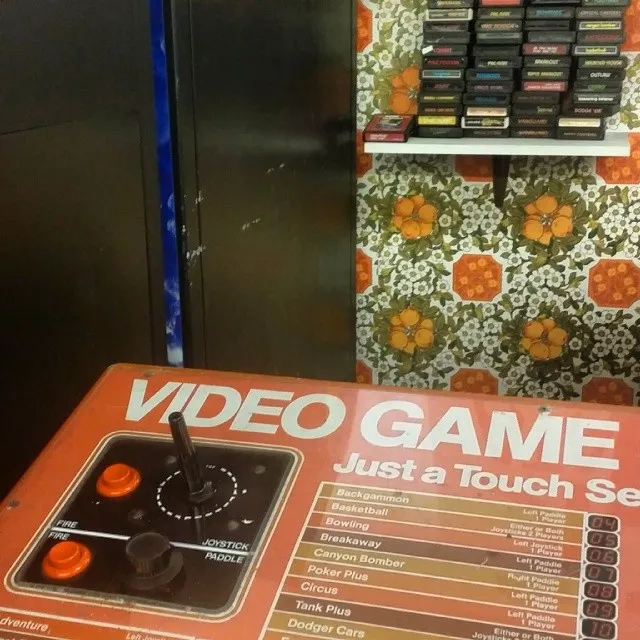
Photo: j bizzie from MINNEAPOLIS, USA, CC BY 2.0, via Wikimedia Commons
It's 6:47 on a Saturday morning in suburban Ohio, and Marlene Okafor is already third in line outside a split-level ranch with a hand-painted sign zip-tied to the mailbox. The estate sale doesn't open for thirteen minutes. She's holding a coffee, a flashlight, and a mental map of the house she's never been inside.
"Garage first," she says, without looking up. "Nobody prices the garage right. They spend all week on the living room and then just panic when it comes to the boxes out here."
Marlene is what the community calls a hunter — part reseller, part preservationist, part professional gambler who never quite admits the gambling part. Her quarry: vintage electronics and video games abandoned by families who don't know — or don't care — what they're worth. Her record haul, a boxed Sega Dreamcast bundle with two controllers and a copy of Jet Grind Radio, cost her five dollars and roughly ninety seconds of negotiation.
The Tell Is Never the Console
Here's the first thing every hunter will tell you, usually with the smugness of someone reciting scripture: the console itself means nothing. Everybody knows a Super Nintendo is worth something. The money hides in the accessories nobody recognizes.
"The controller adapter, the weird third-party cable, the box of memory cards — that's where people leave money on the table," explains Devon Ruiz, a hunter from Phoenix who estimates he's flipped over 400 consoles in a decade. "I once paid $12 for a box of 'random cords' that contained a Sega Saturn NetLink modem. Look up what those go for. I'll wait."
The other universal tell: dust. Not the decorative kind — the archaeological kind. A system caked in a uniform layer of basement grime has usually been sitting untouched since roughly the Clinton administration, which means the games around it have been sitting too. Hunters call these "time capsule houses," and they speak of them the way sailors speak of the sea: with respect, and a little fear.
The Strategy Is a Science (Barely)
Ask five hunters for their method and you'll get six methods, but a few patterns emerge:
Go early, but not too early. Estate sales often have preview lists or numbered-entry systems. Showing up at 4 a.m. just makes you the person everyone else quietly resents, and resented people don't get offered the box under the table.
Head straight past the obvious. The glass cabinet with the displayed electronics? Priced by someone who checked eBay. The cardboard box labeled "misc wires"? Priced by someone who wants it gone.
Never look excited. The cardinal rule. Hunters describe adopting what one calls "the estate sale face" — mild, polite, faintly disappointed. "You find the CIB Chrono Trigger, you say 'huh, my brother had this one,' and you keep moving," Marlene instructs. "The second your eyes light up, the price triples."
Ask about the attic. Politely. Always politely. Half the legendary finds in hunter lore — the stories traded like folklore at flea markets — began with someone saying, "You know there's more stuff up there, right?"
The One That Got Away (Everyone Has One)
For a subculture built on patience and persistence, hunters are surprisingly haunted. Ask about their white whale and watch the light drain from their face.
Devon's is a briefcase. "Garage sale, 2016. Leather briefcase, heavy. Inside was a complete Commodore setup — monitor, disk drive, the works — plus a shoebox of disks. Guy wanted $40. I said let me hit the ATM. Came back in ten minutes. Sold. To a guy who "doesn't even collect." He pauses. "I think about that briefcase more than I think about some relatives."
Marlene's story is worse because it involves her own hesitation. A yard sale in rural Indiana, a milk crate of cartridges, a loose Stadium Events sitting there looking like every other gray rectangle. "I put it back," she says flatly. "I picked it up and I put it back, because I'd already spent my budget on a bread machine." The bread machine, she notes, still works fine. She hates it.
Your First Hunt: A Field Guide
Inspired? Good. The bar to entry is a tank of gas and a willingness to wake up before your body considers reasonable. A few parting tips from the pros:
- Learn the difference between "cleaning out the house" sales and "collector's estate" sales — the latter are picked over by professionals before the doors open, the former are where miracles happen.
- Bring cash in small bills. A $20 offered for a $25 pile closes deals that hesitation won't.
- Carry a phone, but use it discreetly. Loud price-checking at the table is considered somewhere between rude and criminal.
- And above all: when in doubt, buy the box of cords. Everyone, without exception, underprices the box of cords.
The treasure is out there, sitting in a bin between a bread machine and a box of Christmas lights. The hunters know it. Now you do too. Set two alarms.