Bleeps, Bloops, and Brain Worms: The 8-Bit Sound Effects That Refuse to Leave Your Head
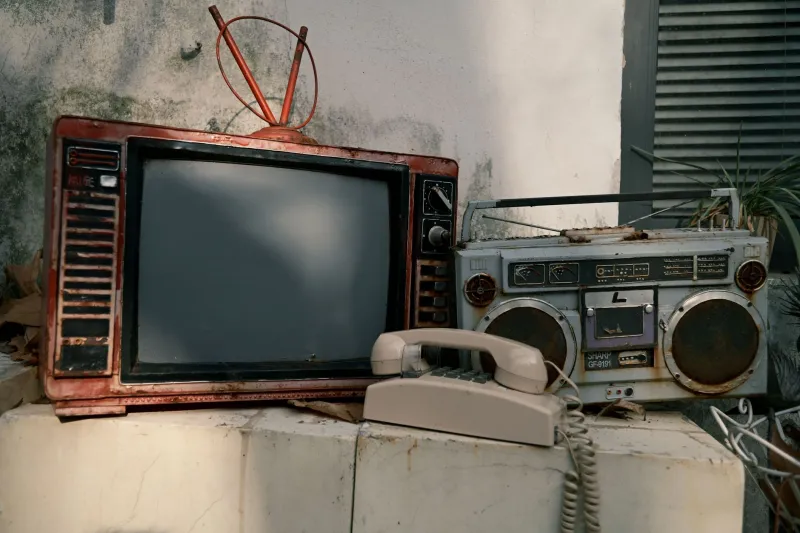
Close your eyes for a second. Now imagine a single descending scale of electronic tones played through a tinny TV speaker circa 1988. Did your stomach just do a little flip? Congratulations — you've been permanently rewired by 8-bit audio, and there is absolutely no known cure.
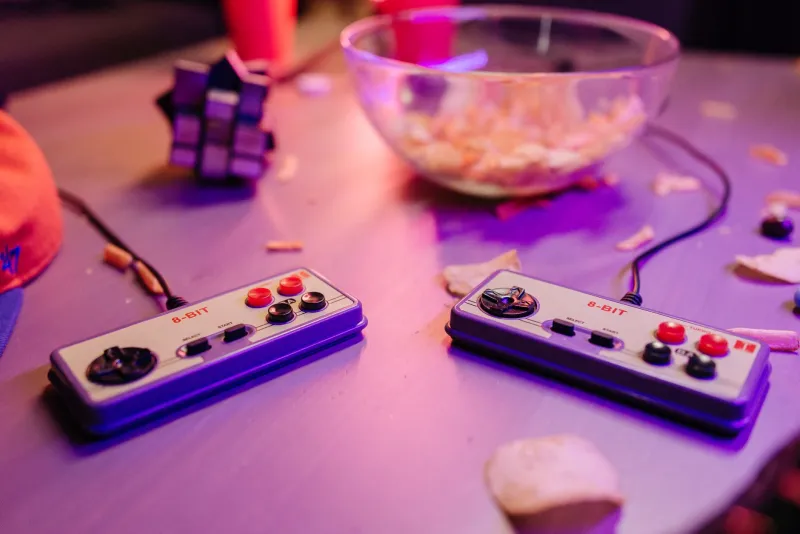
For millions of millennials and Gen Xers who grew up glued to a CRT television with an NES controller cemented into their palms, the sound design of early video games wasn't just background noise. It was the emotional architecture of childhood. And the wild part? Those composers were working with instruments so limited that modern smartphone ringtone apps have more sonic firepower. Let's dig into the ten most iconic sounds of the 8-bit era, the technical wizardry behind them, and why they're still living in your head rent-free — decades later.
The Hardware Handcuffs: Making Music With Almost Nothing
Before we get to the hits, a little context. The NES sound chip — officially called the RP2A03 — gave composers exactly five audio channels to work with: two pulse wave channels, one triangle wave channel, one noise channel, and one rudimentary sample channel (the DPCM channel, which could play tiny, lo-fi audio clips). That's it. Five lanes of sonic traffic to create entire emotional worlds.
The Atari 2600 was even more brutal. Its POKEY and TIA chips produced sounds that were, technically speaking, mathematically "wrong" — the hardware couldn't even generate a proper musical scale. Composers like Rob Fulop essentially had to retune entire songs to fit the Atari's bizarre frequency limitations. The Game Boy, released in 1989, added a fourth "wave" channel that could play custom waveforms, giving composers like Hirokazu Tanaka a little more room to breathe — but not much.
In other words, these people were Michelangelo, and they were given two crayons.
The Top 10 Sounds That Defined a Generation
1. The Super Mario Bros. Overworld Theme (NES, 1985) Composed by Koji Kondo, this is arguably the most recognized piece of music on the planet — more identifiable than most national anthems. Kondo built it on a bossa nova rhythm structure, using the NES pulse channels for the melody and countermelody while the triangle wave handled bass duties. In interviews, Kondo has noted that the theme had to feel "fun and bouncy" without being distracting, since players needed to stay focused. Mission absolutely accomplished — and then some.
2. The Tetris Type A Theme (Game Boy, 1989) Based on a Russian folk song called "Korobeiniki," this arrangement by Hirokazu Tanaka became the sound of productive panic. The Game Boy version, with its slightly muffled but hypnotic melody, is clinically proven (okay, not clinically, but spiritually) to make you want to stack rectangles at 2 a.m. Tanaka managed to make a four-channel handheld sound almost orchestral through clever use of arpeggiated chords — a trick where notes cycle so fast the brain perceives harmony.
3. The Legend of Zelda Dungeon Theme (NES, 1986) Koji Kondo again. This one is a masterclass in tension. By leaning heavily on the noise channel for a persistent, unsettling undercurrent and using minor key intervals in the pulse channels, Kondo made players genuinely nervous about entering a room full of pixels. The loop is short — less than 30 seconds — but its psychological effect is enormous.
4. Pac-Man's Opening Jingle (Atari 2600, 1982) Okay, the Atari port of Pac-Man is famously bad. Like, legendarily, embarrassingly bad. But that little opening ditty? It burrowed into a generation's cerebral cortex and set up permanent residence. It's four seconds of electronic optimism before absolute chaos, and it perfectly encapsulates the early arcade era's chaotic joy.
5. The Metroid Title Screen (NES, 1986) Composed by Hirokazu Tanaka, this is one of the most atmospheric pieces of music ever squeezed out of five audio channels. Long, droning notes. Sparse melody. Unsettling silence between phrases. Tanaka was essentially composing horror movie music with a chip designed for Mario's cheerful adventures, and it's breathtaking.
6. Mega Man 2's Dr. Wily Stage Theme (NES, 1988) Composer Takashi Tateishi delivered what many retro gaming fans consider the single greatest piece of NES music ever written. The dual pulse wave channels create a soaring, almost rock-guitar-like lead melody that feels impossibly epic for the hardware. This song has been covered by orchestras, metal bands, and jazz ensembles. It's that good.
7. The Castlevania Stage 1 Theme — "Vampire Killer" (NES, 1986) Kinuyo Yamashita's composition is propulsive, gothic, and somehow also kind of fun? The bass line on the triangle channel drives the track forward while the pulse channels trade off a melody that sounds like it belongs in a B-movie monster flick — in the absolute best way.
8. The Game Over Jingle from Super Mario Bros. (NES, 1985) Four descending chords. That's all it takes to send a Gen Xer into a cold sweat. Kondo's Game Over theme is short, devastating, and psychologically loaded with decades of childhood frustration. It is the sound of a Saturday afternoon slipping away.
9. The Duck Hunt Dog's Laugh (NES, 1984) This isn't music. It's a war crime. That smug, pixelated dog popping up to cackle at your failure became the first video game villain that players genuinely wanted to physically harm. The sound effect itself — a rising, mocking chitter through the noise channel — is burned into the collective memory of anyone who ever missed a duck.
10. The Pokémon Red/Blue Battle Theme (Game Boy, 1996) Composer Junichi Masuda created a sense of urgent excitement with this track that made every random Pidgey encounter feel like a championship fight. The Game Boy's wave channel carries a bass line that genuinely grooves, while the pulse channels deliver a melody that's been lodged in millennial brains for nearly 30 years.
Why Your Brain Won't Let Go
Neuroscience has a few theories about why these sounds hit so differently. Earworms — those involuntary musical memories — tend to form most powerfully around emotionally significant experiences during adolescence. The limbic system, which handles emotion and memory, is basically on fire during your childhood years, which means the sounds paired with your highest highs (beating Bowser!) and lowest lows (Game Over, again) get stamped into long-term memory with unusual permanence.
There's also the loop factor. 8-bit composers, constrained by ROM space, wrote music designed to repeat indefinitely without annoying the player. To accomplish this, they instinctively followed principles of earworm composition — simple melodic contours, surprising but satisfying interval jumps, and strong rhythmic hooks. They were accidentally engineering the perfect memory virus.
The Chiptune Scene Is Very Much Alive
Here's the beautiful thing: a whole community of modern composers has taken the aesthetic of 8-bit audio and run with it. Artists like Anamanaguchi, Sabrepulse, Chipzel, and YMCK are creating original music using actual Game Boys, NES hardware, and software emulators of vintage chips. The genre — broadly called chiptune — has its own festivals, record labels, and rabid fanbase.
For a taste of where the tradition lives today, check out these artists on Spotify:
- Anamanaguchi — [USA] (their Dawn Metropolis album is essential)
- Chipzel — Spectra (she composed the Super Hexagon soundtrack)
- YMCK — Japanese chiptune pop that is genuinely joyful
- Sabrepulse — UK-based but spiritually American in his Game Boy punk energy
- Kubbi — cinematic chiptune that'll make you emotional in the best way
Search "chiptune essentials" on Spotify and prepare to lose an afternoon.
The composers who built these sounds were solving engineering problems, not writing symphonies — or so they thought. What they actually did was accidentally score the childhoods of tens of millions of people with music that has proven more durable than almost anything produced by the mainstream pop industry of the same era.
So the next time that Zelda dungeon theme floats unbidden into your brain at 11 p.m., just know: you didn't choose the bloop life. The bloop life chose you.