Tandy, We Hardly Knew Ye: The Beautiful, Chaotic Rise and Sad Collapse of Radio Shack
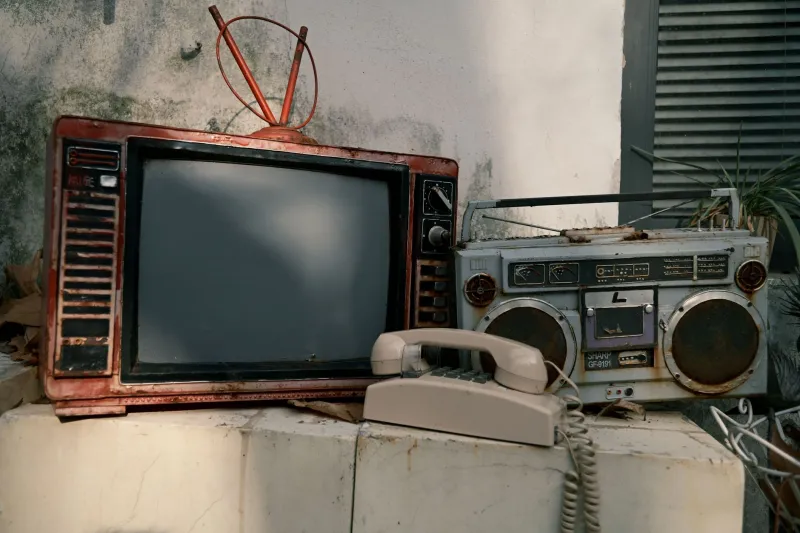
If you grew up in the 1970s, '80s, or early '90s anywhere in the continental United States, there is a specific smell encoded somewhere in your memory. It's a cocktail of solder flux, plastic clamshell packaging, and something vaguely electrical — like the air just before a thunderstorm, but indoors and fluorescently lit. That smell was Radio Shack. And for a certain generation of tinkerers, gamers, and curious minds, walking through that door was like stepping into a cathedral of possibility.
Today, Radio Shack exists mostly as a punchline, a ghost, and a cautionary business school case study. But before the memes and the bankruptcy filings and the hollow storefronts, there was something genuinely remarkable happening inside those cluttered little shops. Something worth remembering properly.
In the Beginning: Ham Radio and a Fort Worth Dream
Radio Shack didn't start as a retail chain. It started in 1921 as a Boston-based mail-order operation catering to amateur radio enthusiasts — the original tech nerds, people who built their own receivers from scratch and considered a well-soldered connection a form of art. For decades, it existed in this comfortable niche, selling components to a passionate but small hobbyist community.
Then, in 1963, a Fort Worth, Texas leather goods company called Tandy Corporation bought the struggling chain for about $300,000. Yes, leather goods. The connection seems bizarre until you realize that Tandy's CEO, Charles Tandy, was one of the great retail visionaries of the 20th century. He looked at Radio Shack's component-focused model and saw something the original founders hadn't: a mass-market opportunity hiding inside a hobbyist shop.
Tandy expanded aggressively, franchising and corporatizing the Radio Shack brand across the country through the late 1960s and into the '70s. By the time the personal computer revolution arrived, Radio Shack was already everywhere — a strip mall staple, a fixture of American suburban life, perfectly positioned to become something much bigger than a parts store.
The TRS-80 and the Golden Age of the Curious American
In 1977, Radio Shack did something audacious. While Apple was selling the Apple II to tech enthusiasts with deep pockets and Commodore was still finding its footing, Radio Shack launched the TRS-80 Model I — a complete home computer system priced at $599 (about $3,000 in today's money, but still significantly accessible for its time) and sold it right off the shelf in their stores nationwide.
This was revolutionary. You didn't need to go to a specialty computer boutique or order from a catalog. You could walk into your local Radio Shack — the same place you bought 9-volt batteries and CB radio accessories — and walk out with a home computer. The TRS-80 sold 10,000 units in its first month. Radio Shack had accidentally (or brilliantly) become America's first mainstream personal computer retailer.
For a generation of kids and adults who were just beginning to understand that computers weren't just for NASA, the Radio Shack experience was transformative. You could stand at the display model and type BASIC commands. You could ask the (admittedly, sometimes overwhelmed) salesperson questions. You could hold the future in your hands in a strip mall between a Subway and a dry cleaner.
The store's component section remained a wonderland for hobbyists throughout this era. Rows of resistors and capacitors in tiny labeled drawers. Soldering irons and multimeters. Breadboards and wire spools. For the kid who wanted to understand how electronics worked — not just consume them — Radio Shack was the only show in town.
The Aisles of Our Youth: A Love Letter to Organized Chaos
Let's be honest about something: Radio Shack stores were not elegant retail environments. They were dense, slightly overwhelming, and staffed by employees whose enthusiasm for electronics ranged from encyclopedic to completely nonexistent depending on which location you wandered into.
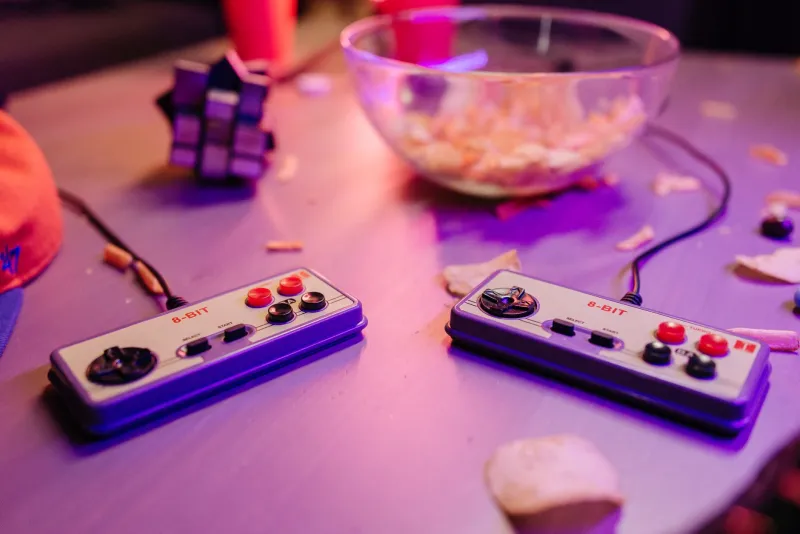
But that chaos was part of the charm. There was always something unexpected. A clearance bin of discontinued walkie-talkies. A display of the latest Tandy computer sitting next to a rack of blank cassette tapes. Joysticks for the Atari 2600 hanging on a peg hook next to a CB radio antenna. It was maximalist retail before maximalism was a concept — a physical manifestation of the idea that electronics touched everything.
For Gen X kids especially, Radio Shack was often the place where you convinced your parents to buy you your first "real" piece of technology. Not a toy, but an actual electronic thing. A handheld electronic game. A programmable calculator. A crystal radio kit that you'd build yourself and feel like an absolute genius when it actually worked.
The 100-in-1 Electronic Project Kit deserves special mention here. Generations of young Americans learned the fundamentals of electronics from that red-and-white spring-terminal board. It was Radio Shack at its purest: democratizing technical knowledge, one project at a time.
Where It All Started Going Wrong
The decline of Radio Shack is a story told in slow motion, which almost makes it more painful than a sudden collapse.
Through the late 1980s and into the 1990s, the company faced its first existential challenge: the commoditization of consumer electronics. As big-box retailers like Best Buy and Circuit City expanded nationally, Radio Shack's advantage — being the only electronics store in town — eroded rapidly. Why buy a VCR at Radio Shack when Best Buy had fifty models and a parking lot the size of a small airport?
Radio Shack's response was to pivot toward cellular phones in the 1990s and 2000s, which initially worked — the company became a significant wireless carrier reseller. But this strategy came with a brutal side effect: it alienated the core customer. The hobbyist who came in for a specific capacitor now had to wade through a sales pitch for a Verizon plan. The component drawers shrank. The project kits disappeared. The soul of the store quietly packed its bags.
The company's leadership through the 2000s seemed genuinely confused about what Radio Shack was supposed to be. Rebranding attempts came and went. A 2009 push to rebrand as simply "The Shack" was met with universal ridicule. The stores grew simultaneously more generic and more cluttered with wireless accessories. Two bankruptcy filings — in 2015 and 2017 — effectively ended the company as a meaningful retail presence, leaving behind only a handful of independently operated franchise locations and a brand name sold off to a series of holding companies.
The Survivors: Keeping the Frequency Alive
Here's the part that should make your heart feel a little warmer: the Radio Shack faithful never went away. They just moved online.
Communities on Reddit (r/hammies, r/vintagecomputing), dedicated Facebook groups, and forums like Vintage Computer Federation keep the spirit of Radio Shack's hobbyist heritage alive and remarkably active. Collectors hunt for original TRS-80 systems, Tandy 1000 computers, and vintage Radio Shack catalogs — those glorious annual publications that were essentially wish books for the electronically inclined, as eagerly anticipated as the Sears Christmas catalog.
The annual Radio Shack catalogs from the 1970s and '80s have become collector's items in their own right. Scanned and archived at sites like Archive.org, they offer a time capsule view of American technological aspiration, page after page of gadgets and components and home computers that represented the bleeding edge of accessible technology for their era.
And the maker movement — the modern DIY electronics community built around Arduino, Raspberry Pi, and 3D printing — is, in many ways, Radio Shack's spiritual successor. The same impulse that sent a kid into a Radio Shack to buy components for a science fair project now sends them to Adafruit or SparkFun. The curiosity didn't die. It just found new outlets.
Radio Shack didn't fail because Americans stopped loving technology. It failed because it stopped believing in the particular kind of American who loved understanding technology — the tinkerer, the builder, the kid who wanted to know what was inside the box. That customer was always there. Radio Shack just forgot to keep showing up for them.
Somewhere in a garage right now, a Gen Xer is firing up a TRS-80 Model III and listening to it boot. The sound it makes is not melodic. It's not pretty. But to the right ears, it sounds exactly like home.