The Computers History Forgot (And Collectors Are Desperately Trying to Remember)

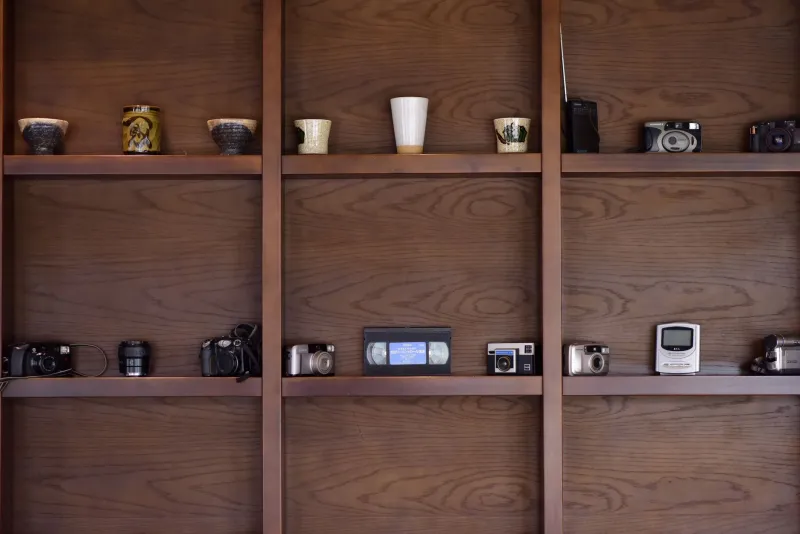
Photo: Pedro Ribeiro Simões from Lisboa, Portugal, CC BY 2.0, via Wikimedia Commons
Somewhere in a climate-controlled spare bedroom in suburban Ohio, a man named Terry has seventeen Amiga computers. Not seventeen types of Amiga. Seventeen individual units, in varying states of restoration, each with a documented provenance and a specific place in his personal taxonomy of what he calls "the machines that should have won."
Terry is not unusual in the retro computing community. He's practically mainstream.
The 1980s personal computer wars produced a winner — the IBM-compatible PC and its MS-DOS operating system — and a long, fascinating graveyard of also-rans that were, by almost any technical measure, more interesting than what conquered them. The Commodore 64. The Amiga line. The Atari ST. The TRS-80. The Apple IIe's various competitors. These machines didn't lose because they were inferior. They lost because of distribution deals, corporate politics, retail relationships, and the kind of momentum that, once it builds behind a standard, becomes essentially impossible to stop.
Decades later, their descendants are finally getting the appreciation they were denied the first time around.
The Commodore 64: The People's Computer That Got No Respect
Let's start with the undisputed king of the underdog pile. The Commodore 64, released in 1982, remains the best-selling single personal computer model in history — somewhere between 12 and 17 million units, depending on whose numbers you trust. It had a custom sound chip, the SID (Sound Interface Device), that produced audio so rich and characterful that there are still active composer communities today writing original music for it. Its graphics capabilities embarrassed the IBM PC of the same era.
And yet: IBM won. Microsoft won. The Commodore 64 became a gaming machine, then a hobbyist machine, then a memory.
"Commodore's problem was never the hardware," says retro computing historian and author Dana Pressley, who wrote extensively about the home computer era for Byte magazine's digital archive project. "It was management. Jack Tramiel built something extraordinary and then the company spent the next decade making inexplicable decisions about how to sell it. The machine deserved better stewardship."
The C64's legacy is now enormous in collector circles. A fully functional unit in original packaging can fetch $400 or more. The demoscene — a community of programmers who write elaborate audiovisual programs to push hardware to its absolute limits — never stopped creating for the platform. New C64 software is still being released in 2024. The machine refused to die, even when the company that made it did.
The Amiga: The Multimedia Computer That Arrived Twenty Years Early
If the Commodore 64 was a victim of mismanagement, the Amiga was a victim of cosmic bad timing wrapped in even worse mismanagement. The original Amiga 1000, released in 1985, was a preposterous piece of hardware for its price point. Multitasking operating system. Hardware-assisted graphics with a color palette that made IBM PCs look like they were running on cave paintings. Stereo audio. A graphical user interface that felt genuinely usable.
Television studios used Amigas for video production. The Video Toaster — an Amiga-based video editing suite — was used on the original Babylon 5 and a staggering number of local news stations throughout the early 1990s. The machine that your neighbor thought was a fancy game console was running professional broadcast graphics.
"When people talk about what the Amiga was capable of, they always sound like they're exaggerating," says collector and YouTuber Renee Castillo, who documents her Amiga restoration projects to an audience of over 80,000 subscribers. "And then you show someone a demo running on a 1987 Amiga 500 and they just go quiet. Because it looks like something that shouldn't have been possible for another decade."
The Amiga community today is genuinely thriving in ways that feel almost defiant. New operating system updates for AmigaOS are still being released. Third-party developers are producing new hardware expansions. Restored Amigas regularly sell for $300 to $800 on the collector market, with rarer configurations climbing well past that.
The Atari ST: The Computer That Should Have Been the Mac
The Atari ST occupies a specific and melancholy corner of the alternate-history computer museum. Released in 1985, the same year as the Amiga, it ran a version of GEM — a graphical interface that looked uncannily like early Mac OS — on a Motorola 68000 processor that was genuinely powerful for its time. It had built-in MIDI ports, which made it the de facto standard for music production studios throughout the late 1980s and early 1990s.
Musicians loved the Atari ST with a fervor that bordered on religious. In European recording studios especially, the machine held on well into the mid-1990s purely on the strength of its MIDI timing accuracy. Some professional composers were still running ST units into the 2000s because nothing else felt quite right for sequencing.
"The ST's MIDI implementation was so clean and so reliable that it basically defined what professional MIDI felt like for an entire generation of producers," says synthesizer historian and collector Paul Nguyen. "If you talked to working musicians in the late '80s, the Atari ST wasn't a gaming computer. It was a studio tool. That reputation still means something in certain circles."
Why They Lost (And Why That's Not the Whole Story)
The standard narrative about why IBM-compatible PCs won the 1980s computer wars focuses on corporate adoption — businesses chose IBM, businesses drove software development, software drove consumer adoption, and the feedback loop became unstoppable. That's mostly accurate. It's also incomplete.
Retail distribution mattered enormously. Commodore's relationship with mass-market retailers was chaotic. Atari's corporate turbulence under multiple ownership changes made consistent marketing nearly impossible. The Amiga suffered from Commodore's inexplicable decision to market it primarily as a game machine in North America while European markets got a more complete pitch.
The machines that won weren't necessarily the best machines. They were the machines attached to the best business relationships. This is not a new observation, but it's one that still stings when you watch an Amiga 2000 boot up and effortlessly multitask in ways that Windows 3.1 couldn't manage years later.
The Collector's Verdict
What the modern retro computing community is doing with these machines goes beyond nostalgia. Preservation groups are documenting software libraries that were never commercially catalogued. Hardware engineers are designing modern expansion cards that bring ethernet, USB, and high-definition display output to 35-year-old computers without compromising their original character. Online communities trade restoration tips, track down replacement capacitors, and celebrate successful repairs with the enthusiasm of a Super Bowl win.
These weren't failed computers. They were computers that failed to find the right moment. The collectors keeping them alive are making a quiet argument that the market's verdict isn't the same as history's verdict — and that some machines deserve a longer hearing than the 1980s gave them.
Terry, back in his Ohio spare bedroom, would agree. He's currently restoring his eighteenth Amiga.