Shelves Full of Feelings: Why Millennials Are Paying Absurd Money to Own Stuff They Could Just Stream
There's a particular kind of madness that takes hold when you're standing in a Goodwill at 8 a.m. on a Saturday, elbowing past a retiree to grab a scratched copy of Final Fantasy VII for PS1. You know you could emulate it. You know you could probably find it on a subscription service. You spend $34 on it anyway, and you feel great about it.
Welcome to the physical media revival—one of the most counterintuitive cultural trends of the 2020s, in which a generation raised on digital convenience is aggressively, almost defiantly, buying stuff they can hold in their hands.
The Streaming Hangover Is Real
For about a decade, the pitch was simple: pay a monthly fee, access everything, own nothing. And honestly? It worked. We cancelled our Netflix DVDs, ripped our CDs into iTunes, and watched our game libraries migrate into the cloud. It was frictionless. It was elegant. It was, in retrospect, a trap.
The cracks started showing when streaming services began quietly yanking content without warning. Movies vanished. TV shows that entire communities had built fandoms around were just... gone. The library you thought you had was never really yours—it was a revolving door managed by licensing agreements and quarterly earnings calls.
"I had The Office memorized," says Derek Paulson, a 34-year-old network engineer from Columbus, Ohio, who now owns over 600 physical games and counting. "Then it moved platforms, then it was behind a different paywall, then some episodes were weirdly cut. I realized I didn't own any of this. I was just renting access to someone else's version of it."
That realization, multiplied across millions of frustrated subscribers, quietly ignited a movement.
The Shelf Is the Statement
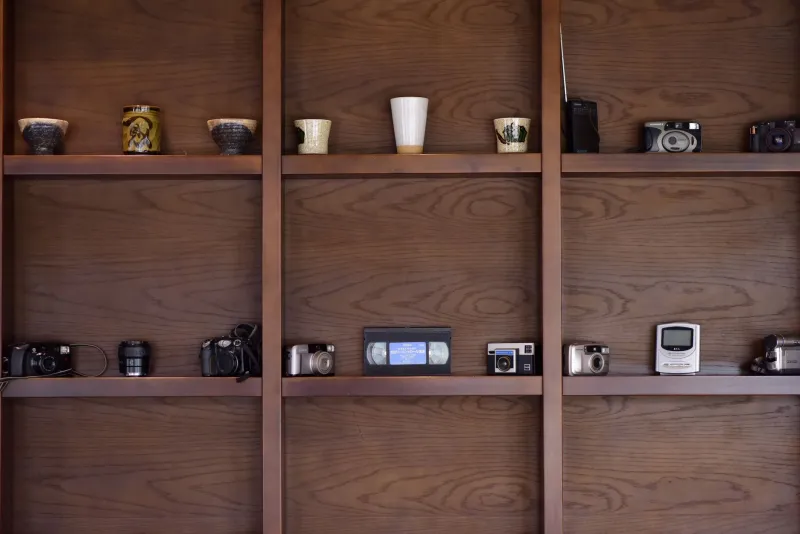
Ask any serious collector why they do it, and the practical arguments come first: permanence, no internet required, no algorithm deciding what you should want next. But spend five more minutes with them and something more interesting emerges. These shelves aren't just storage. They're autobiography.
Jessica Tremblay, a 29-year-old graphic designer in Austin, Texas, started her collection three years ago with a box of Super Nintendo cartridges she bought off Facebook Marketplace. Today, her living room doubles as a museum of her own childhood, with hand-labeled shelves organized by console generation and a dedicated display case for her sealed Game Boy Color games.
"People come over and they just stop," she says. "They pick things up. They talk about memories. My Spotify playlist has never once done that."
The psychological literature on object attachment would not be surprised. Physical objects anchor memory in ways that digital files simply don't. A cartridge you blew into as a kid carries a texture, a smell, a weight that a digital license key cannot replicate. Collectors aren't just buying media—they're buying portals.
Rebellion Disguised as a Hobby
There's also something unmistakably political happening here, even if most collectors wouldn't frame it that way. Subscription culture has quietly restructured our relationship with entertainment from ownership to access, from permanence to perpetual payment. Physical media is, at its core, a rejection of that model.
"I like that nobody can take it from me," says Marcus Webb, 38, a high school history teacher from Portland who has amassed a vinyl collection north of 2,000 records alongside his retro game library. "Disney can't decide tomorrow that my copy of Aladdin doesn't fit their brand anymore. It's mine. That matters."
The fear is not irrational. Publishers have already demonstrated a willingness to remotely revoke digital purchases—most infamously when Microsoft deactivated purchased TV episodes during a service restructuring. The lesson landed hard: digital ownership is provisional. Physical ownership is not.
The Price of Nostalgia (It's Going Up)
Here's where the story gets uncomfortable: this trend has absolutely detonated the resale market. A Chrono Trigger cartridge that cost $60 new in 1995 will run you anywhere from $150 to $300 today depending on condition. Sealed copies of late-run N64 games have crossed four figures at auction. The same market forces that made vinyl expensive are now making CIB (complete-in-box) SNES games feel like investment vehicles.
This has created a two-tier collecting world. Casual nostalgia buyers pick up loose cartridges and used DVDs at thrift stores and garage sales—affordable, accessible, genuinely fun. Serious collectors, meanwhile, are grading cartridges through services like WATA and VGA, chasing sealed condition, treating games less like artifacts to play and more like assets to hold.
Not everyone is thrilled about the financialization of their hobby. "The graders ruined part of it," Derek admits. "When a sealed copy of Super Mario Bros. sells for half a million dollars, it stops being about the game. It becomes about the money. That's not why I'm here."
The Joy That Algorithms Can't Deliver
Still, for every speculator treating cartridges like crypto, there are a hundred people who just want to hold the thing they loved as a kid. Who want to read the manual. Who want to feel the satisfying click of a cartridge seating into a console slot.
Jessica puts it simply: "No recommendation engine has ever given me that feeling. No auto-play feature. Just me, a game I remember from when I was nine, and a shelf that tells people exactly who I am without me having to say a word."
The bits may be retro. The rebellion is very much present tense.