Retro, But Make It 4K: The Modders Dragging Classic Consoles Into the 21st Century
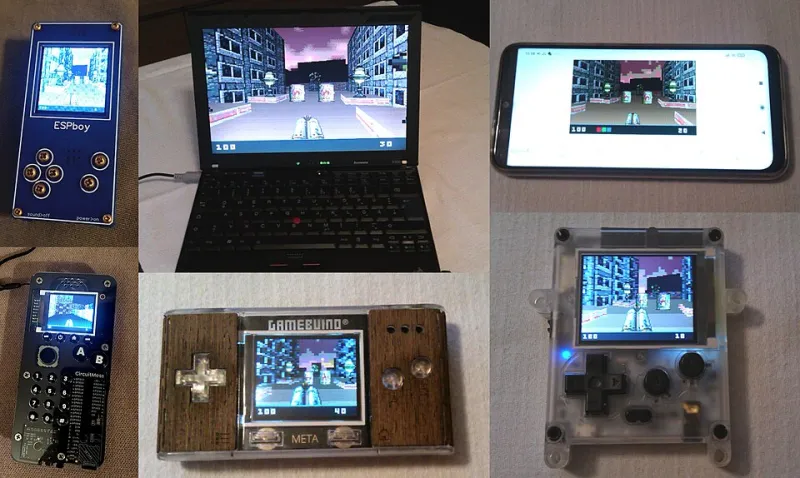
Photo: Drummyfish, CC0, via Wikimedia Commons
At some point, you have to ask yourself a question.
Are you playing Donkey Kong Country because you love the experience of Donkey Kong Country — the music, the sprites, the level design, the specific joy of those pre-rendered graphics that blew every twelve-year-old's mind in 1994? Or are you playing it because you love the experience of playing it on original hardware, on a CRT, through composite cables, exactly as Rare intended, and anything else is basically a cover band?
Your answer to that question determines exactly which side of retro gaming's most entertaining civil war you fall on.
On one side: the authenticity purists, who will tell you, at length and with mounting intensity, that the only legitimate retro gaming experience involves original hardware, period-correct displays, and signal chains that haven't been touched since 1995. On the other: the performance enthusiasts, who have spent the last decade pouring extraordinary amounts of money, technical skill, and raw stubbornness into making vintage consoles perform in ways their original engineers never imagined.
Both sides think the other is missing the point. Both sides are kind of right. It's great.
The Problem With Playing Old Games on New TVs
Here's the thing nobody warned you about when you dug your Super Nintendo out of the attic: modern televisions are, for retro gaming purposes, kind of terrible. Not because they're bad displays — they're objectively spectacular displays — but because they're designed around assumptions that didn't exist when your SNES was manufactured.
Modern flat panels process video input digitally, which introduces latency. Even a few frames of input lag — the gap between pressing a button and seeing the result on screen — is imperceptible watching a movie and absolutely catastrophic playing a precision platformer. Additionally, vintage consoles output analog signals in resolutions (240p, anyone?) that modern TVs handle poorly, resulting in blurry, stretched, or otherwise degraded images that make your childhood memories look like they're being played through a wet sock.
The retro gaming community has known about this problem for years. The solutions people have developed to address it range from "sensible and affordable" to "technically impressive and financially alarming."
The Upscaler Arms Race
The most accessible entry point is the video upscaler — a device that sits between your vintage console and your modern TV, converting the analog signal to HDMI while minimizing lag and cleaning up the image. The RetroTINK line of products, developed by Mike Chi, has become something close to the community standard, with the RetroTINK 5X Pro sitting in thousands of living rooms across the country at a price point that's steep but not insane.
Upscalers do a genuinely impressive job. The image quality improvement over a raw composite connection is stark — sharper, more stable, with configurable scanline filters that can simulate a CRT's appearance on a flat panel. Input lag is measured in milliseconds rather than frames. For most people, this is the sweet spot: a meaningful upgrade that doesn't require opening up your console with a soldering iron.
But "most people" is not the community we're talking about here.
FPGA: When You Want the Real Thing Without the Real Thing
Field-programmable gate arrays — FPGAs — are where the rabbit hole gets genuinely deep. An FPGA is a chip that can be programmed to replicate the behavior of other chips at the hardware level, not through software emulation but through actual logic replication. The distinction matters enormously to the people it matters to.
Devices like the Analogue Pocket (Game Boy and friends), Analogue Mega Sg (Sega Genesis), and the MiSTer FPGA platform can run original game cartridges — or ROM files — with cycle-accurate hardware replication. No emulation lag, no software interpretation, no compromises. The Analogue Pocket, which outputs to a gorgeous backlit screen and supports HDMI out to a TV, retails for $219 and has been backordered basically since launch.
The MiSTer is a different beast entirely: an open-source FPGA platform that can replicate dozens of vintage systems, from the Atari 2600 to the PlayStation, and costs anywhere from $150 to $400 depending on configuration. It has a devoted, technically sophisticated community that treats it less like a gaming device and more like a digital preservation platform. The forums are dense with technical documentation. The Discord is not for the faint of heart.
"FPGA replication is the closest thing to actual hardware short of actual hardware," says Jason Park, a 37-year-old electrical engineer from Austin who has built three MiSTer systems and written extensively about FPGA accuracy on his personal blog. "If the goal is to experience the game exactly as the original hardware experienced it, FPGA is the answer. Emulation is an approximation. FPGA is a translation."
Purists, notably, are not entirely satisfied with this answer. A translation, they point out, is still not the original.
The Mod Scene: Open-Heart Surgery for Vintage Hardware
For those who insist on original silicon — the actual chips, the actual boards, the actual hardware manufactured in whatever year their console was made — but still want modern output quality, the board-level modification scene offers a third path. It is expensive, technically demanding, and produces results that are, admittedly, kind of astonishing.
HDMI mods for the Super Nintendo, Sega Genesis, Nintendo 64, and dozens of other platforms are available from specialists who will either sell you a kit (for the technically confident) or perform the installation themselves (for everyone else). The HDMI mod for an SNES, performed by a reputable installer, runs $150 to $250 depending on the board revision. The result is your actual Super Nintendo, your actual cartridges, your actual hardware — outputting clean digital video over HDMI with minimal lag.
Then there's the RGB scene, which is its own whole universe: extracting the highest-quality analog signal from vintage hardware and feeding it into a professional-grade upscaler or, for the truly committed, a properly equipped CRT. The RetroRGB community has produced exhaustive documentation on RGB output quality for virtually every vintage system ever made, rated by board revision, region, and mod status.
"I have probably $800 in mods on my original 1990 SNES," says Danielle Torres, a 39-year-old graphic designer from Denver, without a trace of apology. "But it's my SNES. The one I grew up with. The one that has the specific wear patterns on the controller ports from my specific childhood. That matters to me in a way that an FPGA clone, however accurate, just doesn't replicate."
Preservation or Sacrilege?
Here's where the purists make their most compelling argument, and it's worth taking seriously: modifying original hardware introduces risk. A botched HDMI installation can damage a board that may be irreplaceable. Every modification alters the historical integrity of the device. And the more the community normalizes modding original hardware, the more pressure it puts on the finite supply of unmodified examples.
It's a legitimate concern. Original, unmodified hardware in excellent condition is increasingly valuable precisely because it's increasingly rare. Every SNES that gets an HDMI mod is one fewer unmodified SNES in existence.
The counter-argument is equally compelling: a console sitting in a climate-controlled display case, never played, is preserved but not experienced. A modified console that gets played weekly is keeping the games alive in the only way that ultimately matters — by being played by people who love them.
Neither argument wins cleanly. Both are true at the same time, which is, appropriately enough, pretty much the defining condition of being a retro gaming enthusiast in 2024.
Press start and figure it out.