ROM Coms and Hard Truths: The Fracture Running Right Through the Heart of Retro Gaming
Here is a scenario that plays out approximately every 48 hours on retro gaming forums across the internet:
Someone posts a screenshot of them playing Castlevania: Rondo of Blood — a game that never received an official North American release and currently costs upward of $150 for a legitimate PC Engine CD copy — on an emulator. They're thrilled. They're sharing the joy. And within minutes, the thread has become a constitutional law debate.
"You're not really playing it." "You're literally stealing." "The publisher abandoned this game 30 years ago." "That doesn't matter legally." "Legally isn't the same as ethically." "Nintendo is a corporation, not your friend." And so on, world without end.
Welcome to one of the most genuinely unresolved philosophical disputes in modern gaming culture: the great emulation schism, where preservationists, purists, lawyers, fans, and corporate IP departments are all pulling in different directions and nobody — nobody — is entirely right.
Two Communities, One Hobby, Zero Consensus
At its most basic, the divide breaks down like this.
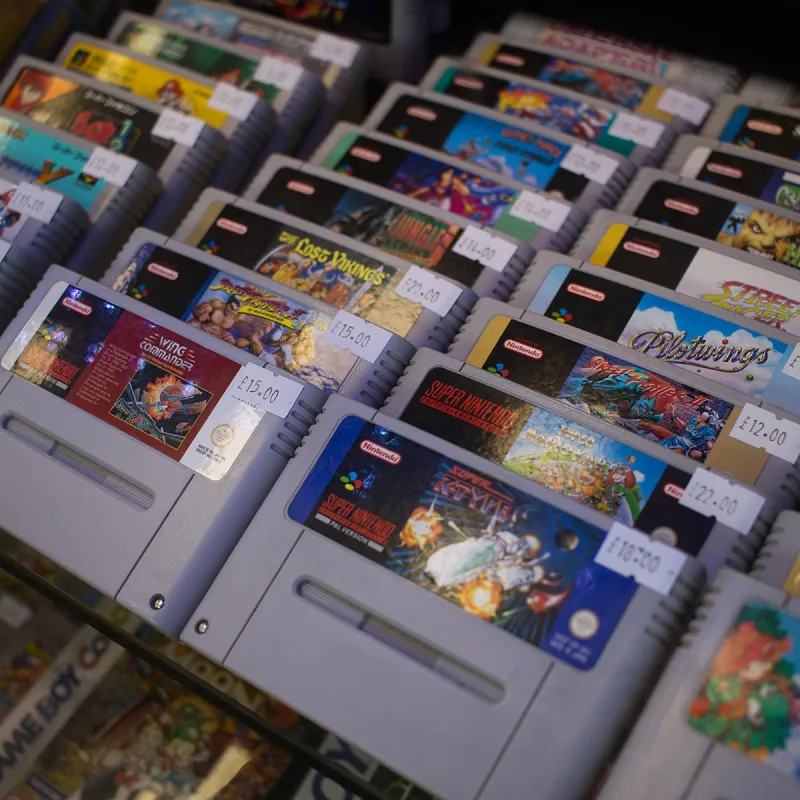
On one side: the hardware purists. These are collectors and players who believe that authentic retro gaming requires authentic retro hardware. Original cartridges, original consoles, original controllers — ideally original CRT televisions, because the games were designed for scanlines and composite video, not HDMI upscaling. For this camp, emulation is at best a pale substitute and at worst a philosophical betrayal of the hobby. The experience isn't just about the pixels on screen; it's about the physical ritual of the thing, the weight of the cartridge, the specific way an original SNES controller feels in 2024.
On the other side: the preservationists and emulation advocates. These are players, archivists, and developers who argue that emulation is not only legitimate but essential — that without ROMs and emulators, enormous swaths of gaming history would simply cease to be accessible to the public. They point to the hundreds of games that have never been re-released, the titles rotting in corporate vaults, the Japanese exclusives that never made it stateside, and the basic reality that original hardware fails. Capacitors leak. Batteries die. Cartridge connectors corrode. Physical media is mortal.
Both positions are coherent. Both positions are incomplete. And the legal landscape makes everything significantly more complicated.
The Legal Reality (It's Not Great for Anyone)
Here's the uncomfortable truth that both sides occasionally prefer to sidestep: from a strict legal standpoint in the United States, ROM distribution is almost certainly copyright infringement, regardless of whether you own the original cartridge.
The "I own the game, I can make a backup" argument is legally murkier than its proponents suggest. While fair use doctrine offers some protection for personal archival copies, distributing ROMs — even of games that haven't been commercially available for decades — is a different matter entirely. Nintendo's successful lawsuit against ROM site operators in 2018, resulting in settlements totaling $12 million, made this uncomfortably clear.
But legality and ethics are not the same thing, and this is where the conversation gets genuinely interesting. When a publisher has made no effort to re-release a title, when the original developers have long since disbanded, when the game exists nowhere in any commercial marketplace — is a person who downloads a ROM really harming anyone? The courts say potentially yes. Common sense says... it's complicated.
The Video Game History Foundation, a nonprofit dedicated to preserving gaming's cultural legacy, has argued publicly that an estimated 87 percent of classic video games are currently out of print and commercially unavailable. That's not a fringe statistic. That's the near-total disappearance of an art form's history from legitimate access channels.
Fan Translations and the Gray Zone Gets Grayer
If straightforward emulation is a legal gray area, fan translation projects occupy a gray area within the gray area — and they might be the most morally defensible corner of the whole debate.
For games that were never officially localized for English-speaking markets, fan translation groups have spent decades doing painstaking work to make those titles accessible. Projects like the English translation of Mother 3 — Nintendo's beloved GBA RPG that was inexplicably never released in the US despite overwhelming demand — represent hundreds of hours of volunteer labor by people who genuinely love the source material.
Nintendo has never officially released Mother 3 in English. The fan translation has been downloaded millions of times. Nintendo has never sued the translators. This uneasy standoff has persisted for nearly two decades, and it tells you something important: even the IP holders sometimes recognize that aggressive enforcement against fan preservation work is a PR nightmare they'd rather avoid.
Homebrew communities add yet another layer. Developers building entirely new games for classic hardware — original NES cartridges, Game Boy titles, Sega Genesis releases — operate in a space that's arguably cleaner than ROM distribution, since they're creating new IP rather than copying old IP. And the results have been extraordinary: games like Haunted: Halloween '86 and Battle Kid are legitimate commercial releases on original vintage hardware, blurring the line between "retro" and "new" in ways that make everyone's taxonomy slightly uncomfortable.
What 'Authentic' Even Means Anymore
Underpinning all of this is a deeper question that nobody in the retro gaming community has satisfactorily answered: what does "authentic" retro gaming actually mean in 2025?
Is it authentic if you're playing on original hardware but via an HDMI adapter that didn't exist in 1990? Is it authentic if you're using a flash cart — a modern device that loads ROMs onto original hardware — which purists have complicated feelings about? Is playing on a MiSTer FPGA (hardware that replicates original chips at a circuit level) more or less authentic than software emulation? The MiSTer crowd will tell you it's essentially the same as original hardware. Original hardware people will tell you it's categorically not.
And what about a first-generation millennial who never owned an NES as a child — maybe the family couldn't afford one, maybe they grew up in a region where certain consoles were unavailable — who discovers these games today through emulation? Is their experience less legitimate than someone who happened to be born into the right economic circumstances in 1987?
That last question tends to quiet rooms down pretty fast.
Can Both Camps Coexist?
For all the forum heat, the honest answer is that these communities need each other more than they'd like to admit.
Preservationists need the hardware purists to keep original equipment alive and documented — their technical knowledge of original hardware is what makes accurate emulation possible in the first place. Hardware purists benefit from the cultural energy that emulation brings to the hobby, introducing new players to classic titles who might eventually become collectors themselves.
The real enemy, if there is one, isn't the emulator user or the cartridge collector. It's corporate neglect — the publishers sitting on hundreds of titles that could be re-released, remastered, or at minimum made available through legitimate digital channels, but aren't. Every game locked in a vault because nobody's gotten around to the licensing paperwork is a game that exists, practically speaking, only in ROM form.
Until that changes, the debate will keep running — looping endlessly, like a game left on pause, waiting for someone to pick up the controller and decide what comes next.