Six Figures for a Cartridge: The Cutthroat War Between Collectors and Curators Over Gaming's Rarest Relics
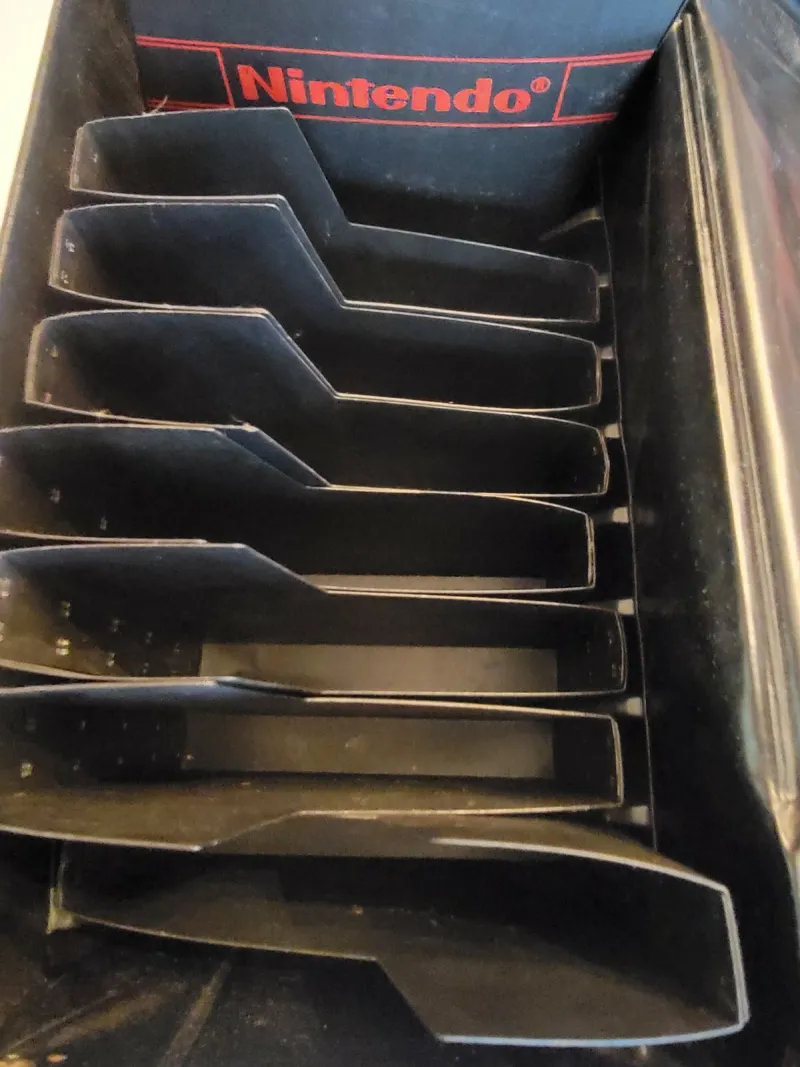
Photo: rare vintage Nintendo NES game cartridges collection display case, via i.ebayimg.com
Somewhere in America right now, there is a gray plastic rectangle sitting inside a custom acrylic case, temperature-controlled, humidity-monitored, and worth more than most people's cars. It is, technically, a Nintendo game. It plays like a Nintendo game. And it will almost certainly never be played again.
Welcome to the high-stakes, surprisingly dramatic world of rare video game cartridge collecting—where Stadium Events, Air Raid, and a handful of other gloriously obscure titles have transformed from thrift store punchlines into six-figure auction trophies. And where the question of who gets to own gaming history has gotten genuinely, uncomfortably complicated.
The Cartridges That Broke the Internet (and Several Bank Accounts)
Let's set the scene. In 2021, a sealed copy of Super Mario 64 sold at Heritage Auctions for $1.56 million. A copy of The Legend of Zelda cleared $870,000. And Stadium Events—a 1987 NES fitness game that Bandai recalled almost immediately after release, leaving fewer than 200 known cartridges in existence—has traded hands for upward of $40,000 in graded condition, with sealed copies theoretically worth multiples of that.
Then there's Air Raid, a 1982 Atari 2600 cartridge so obscure that for years collectors weren't even sure it was real. Only one complete copy with its original box has ever surfaced. It sold for $33,433 back in 2012—a price that, adjusted for the current collector market frenzy, seems almost quaint.
These aren't just rare objects. They're the Fabergé eggs of a generation that grew up pressing its nose against a CRT screen, and the market has noticed.
Museums Are Not Amused
Here's where it gets thorny. Institutions like the National Museum of Play in Rochester, New York—which houses one of the most significant gaming archives in the country—have watched this market explosion with the kind of expression your dad made when he found out what his old baseball cards were worth after he sold them at a garage sale for fifty cents each.
The problem isn't just price. It's access. When a sealed Stadium Events cartridge ends up in a private collection, it effectively disappears. No researcher can study it. No kid on a school field trip can marvel at it behind a velvet rope. No preservation effort can document it properly. It becomes a trophy rather than a text—a financial asset dressed up in nostalgia's clothing.
"These objects are cultural artifacts," argues the preservationist community, and honestly, they're not wrong. A cartridge isn't just a game. It's a record of design decisions, manufacturing history, regional distribution quirks, and the specific economic moment that produced it. Stadium Events exists because Bandai and Nintendo had a falling out. Air Raid exists because a tiny Texas company called Men-A-Vision briefly, gloriously, had no idea what it was doing. That context matters.
But try telling that to the guy who just dropped $47,000 at auction and is feeling pretty good about his investment portfolio.
Speculators vs. True Believers
Not all collectors are villains in this story, and it's worth making that distinction loudly. The retro gaming community has always had a core of genuine, obsessive enthusiasts—people who know the manufacturing date codes on NES cartridges, who can tell a legitimate Stadium Events from a convincing fake by the screw pattern alone, who actually care about this stuff beyond its resale value.
These are the folks who spent decades doing the actual preservation work: dumping ROM files, cataloging regional variants, maintaining databases of known copies. They're the reason we know as much as we do about gaming's chaotic early years.
The problem is that starting around 2020, a different crowd showed up. Flush with pandemic stimulus money and hungry for alternative assets, a wave of speculators discovered that graded video games—certified and sealed by companies like WATA Games—were performing like absurdly good investments. Suddenly, people who couldn't name three NES launch titles were dropping five figures on sealed cartridges as financial instruments.
The WATA grading bubble, which saw some prices crater dramatically after scrutiny of the grading company's relationships with major auction houses, was a cautionary tale that played out in real time. Some of those million-dollar sales? They look a lot shakier in retrospect.
What Happens When Nostalgia Gets a Ticker Symbol
Here's the uncomfortable truth that the retro gaming community is wrestling with: the same cultural affection that makes these objects meaningful is precisely what makes them valuable, which is precisely what prices regular enthusiasts and public institutions out of the market.
It's a feedback loop with no obvious exit. The more we collectively agree that Stadium Events represents something significant about gaming history, the more expensive it becomes for anyone who actually wants to preserve that significance to acquire it.
Some preservation advocates have proposed solutions: right of first refusal for recognized institutions at auction, tax incentives for collectors who donate or loan significant pieces, or expanded digital preservation efforts that at least capture the software even when the hardware is inaccessible. None of these have gotten much traction, mostly because the market doesn't really need anyone's permission to keep doing what it's doing.
So Who Actually Wins?
Honestly? Right now, the answer is "people with a lot of money and a well-lit display cabinet." That's not satisfying, but it's accurate.
The retro gaming community—the real one, the one that's been here since before Heritage Auctions discovered that sealed Marios were newsworthy—is caught in a genuinely difficult position. These are our artifacts. Our cultural touchstones. The physical evidence that the thing we loved as kids was real and mattered.
And they're increasingly owned by people who see them as line items.
The best hope, maybe, is that the speculator wave recedes—as bubbles tend to do—and leaves behind a market that's expensive but at least populated by people who can tell you why Stadium Events was recalled in the first place. (It's because Bandai lost the rights to manufacture the Power Pad peripheral. See? Context matters.)
Until then, pour one out for every sealed cartridge locked in a private vault somewhere, never to load a single sprite again. Gaming history deserves better than a portfolio.