Dead Servers Walking: The Urban Explorers Cracking Open Tech's Forgotten Tombs
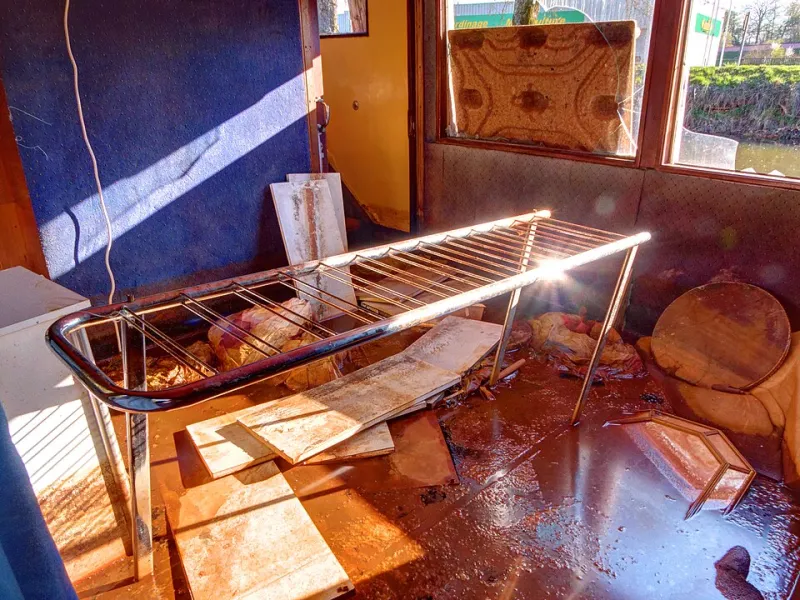
Photo: Thomas Bresson, CC BY 4.0, via Wikimedia Commons
The first thing you notice is the smell.
Not the sharp ozone bite of active electronics, but something older and drier — dust baked into circuit boards over decades, the faint chemical ghost of outgassing plastic, the particular mustiness of a room that has been sealed long enough to develop its own microclimate. It's the smell of time, essentially. The smell of technology that got left behind so fast it didn't even get a proper goodbye.
For a small but intensely dedicated community of urban explorers, tech historians, and salvage archaeologists, that smell is basically catnip.
Across the United States, abandoned computer labs, decommissioned server rooms, and forgotten office buildings are sitting in various states of suspended animation — some for years, some for decades — filled with hardware that nobody bothered to remove when the company folded, the university renovated, or the department simply moved on. These spaces are the digital equivalent of ghost towns, and the people hunting them have given their practice a name that sounds more academic than it probably is: digital archaeology.
The Anatomy of a Tech Time Capsule
Not all abandoned tech sites are created equal. At the low end, you've got the standard corporate IT graveyard: a storage room in a mid-sized office building where someone stacked obsolete PCs in 2003 and nobody ever came back for them. These are common, not particularly exciting, and mostly yield generic Dell towers and the occasional forgotten Zip drive.
But at the high end — the sites that make the community lose its collective mind — you find something genuinely extraordinary. University computer science departments from the 1970s and '80s, preserved under layers of renovation, still containing mainframe terminals, PDP-11 systems, and early Apple II labs. Cold War-era government facilities with rooms full of specialized military computing hardware. Corporate R&D labs from tech companies that flamed out in the dot-com crash, their whiteboards still covered in diagrams, their workstations still logged into internal networks that no longer exist.
These are the sites that get shared in hushed tones on private Discord servers and encrypted Signal chats. The coordinates passed along only after someone vouches for you. The photos posted with locations carefully scrubbed.
"The community is deliberately low-key," explains one explorer who goes by the handle TerminalVelocity and asks that his real name not be used — a request that is, he notes dryly, "very on-brand for someone who enters buildings they're not supposed to be in." "You publicize a location and it gets picked over by people who just want to strip copper. Or you get the building owner spooked and they scrap everything before anyone can document it properly."
What Gets Left Behind, and Why
The question that haunts every abandoned tech site is the same: how does this happen? How does a room full of computing equipment — some of it genuinely historically significant — just get sealed and forgotten?
The answer is usually some combination of corporate inertia, liability anxiety, and the sheer speed of technological obsolescence. When a company upgrades its infrastructure, the cost of properly disposing of old hardware — data destruction, EPA-compliant e-waste processing, asset documentation — can be substantial enough that someone in accounting decides it's cheaper to just lock the door and wait. The wait becomes a year. The year becomes five. The person who made the decision leaves the company. Nobody else knows the room exists. The lease rolls over. Repeat until archaeology.
Universities are particularly prone to this phenomenon. Academic bureaucracies move slowly, real estate is managed by committees, and nobody wants to spend grant money on cleaning out a basement that isn't actively on fire. The result, in documented cases across dozens of campuses, is computing history preserved entirely by accident.
In 2019, explorers documented a University of Michigan storage facility containing working VAX minicomputers from the early 1980s — hardware that legitimate computer history museums would have paid handsomely to acquire. The machines were eventually scrapped during a facilities renovation. The digital archaeology community still talks about it the way Civil War historians talk about burned courthouse records.
The Race Against the Bulldozer
Documentation is the primary mission for the more serious practitioners of digital archaeology. The goal isn't to steal hardware — that's theft, and also tends to damage the very artifacts you're trying to preserve — but to photograph, catalog, and record everything in enough detail that the historical record survives even if the hardware doesn't.
This means photographing serial numbers, recording model numbers, noting the software loaded on accessible systems, and documenting the physical layout of the space itself. Some explorers carry portable hard drives and attempt to image accessible storage media on-site. Others focus purely on photographic documentation, building archives that now number in the tens of thousands of images.
"I think of it as forensic photography," says Maya Okafor, a 35-year-old software developer from Chicago who has been documenting abandoned tech sites for six years. "You're trying to capture enough information that someone could reconstruct what this place was, what it did, and when it stopped doing it. The hardware is great if you can save it, but the context — the room, the setup, the software, the notes on the wall — that's what gets lost when someone just grabs the machines and runs."
Maya has documented seventeen sites across the Midwest, including a particularly remarkable find: a 1990s ISP server room in a suburban Detroit strip mall, abandoned mid-operation when the company went bankrupt in 2001, still containing rack-mounted servers with active power — drawing electricity and doing nothing for over two decades before the building was finally condemned.
"The hard drives were still spinning," she says, with the reverence of someone describing a miracle. "I don't know what was on them. I don't know if anything was still functional. But they were running. Twenty years later."
Rescue Operations and Ethical Minefields
The salvage side of digital archaeology is where things get legally and ethically complicated. Removing hardware from an abandoned building without owner permission is theft, full stop, regardless of how historically significant the hardware might be or how clearly it would otherwise be destroyed. The community is divided — sometimes bitterly — on where the line falls between rescue and theft.
Some explorers work exclusively through official channels: contacting building owners, negotiating with estate administrators, partnering with legitimate museums and archives. It's slower, more bureaucratic, and frequently unsuccessful, but it keeps everyone on the right side of the law.
Others operate in a grayer zone, arguing that documentation without removal is always legitimate, and that hardware rescue is justified when destruction is imminent and ownership is genuinely unclear — a legal argument that wouldn't survive thirty seconds in a courtroom but has a certain frontier logic to it.
What everyone agrees on is the urgency. Every year, e-waste regulations tighten, property developers buy up derelict commercial real estate, and another chunk of physical computing history goes into a dumpster. The window for documenting these spaces is narrowing.
"We're not going to save everything," TerminalVelocity admits. "We're not even going to save most of it. But every machine we document, every room we photograph, every serial number we record — that's a data point that survives. That's something a historian can use fifty years from now."
It's imperfect preservation for an impermanent world. But given the alternative — a skip full of unidentified circuit boards and a blank page in the history books — it'll do.