Ditch the Subscription, Build the Dream: Why DIY Retro PCs Are the New Console Wars
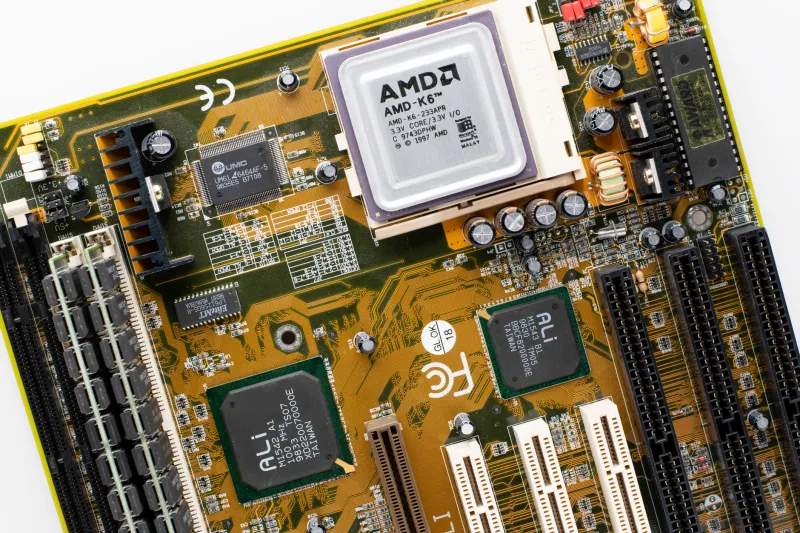
Somewhere in a suburb outside of Columbus, Ohio, a 38-year-old software engineer named Derek is hunched over a workbench surrounded by period-accurate ISA sound cards, a yellowing AT tower case, and approximately fourteen browser tabs about DOS memory management. He is not fixing something. He is building something. Something beautiful. Something his.
"I looked at the PlayStation 5 and thought, I'm going to spend five hundred bucks and Sony still owns my library," Derek told RetroBits over a video call, his newly completed 486 DX2-66 humming proudly in the background. "Then I looked at my parts bin and thought — I could just not do that."
Derek is not alone. Across Reddit threads, Discord servers, and dusty garage workbenches from Portland to Pittsburgh, a quiet but rapidly growing movement is taking shape: millennials and Gen Xers are abandoning the new console treadmill entirely and building retro gaming PCs instead — period-accurate machines loaded with DOS classics, early Windows-era gems, and enough customization to make a modern gaming PC feel like a Fisher-Price toy.
The Economics of Ownership (Or: Math That Hurts)
Let's talk numbers, because the numbers are genuinely wild.
A brand-new PlayStation 5 runs around $500. A decent library of current-gen titles, especially if you're buying physical copies before Sony quietly delists them, will run you another few hundred dollars. Add PlayStation Plus for online access and the "free" monthly games that vanish the second you cancel, and you're looking at a subscription treadmill that never, ever ends.
Now consider the retro PC route. A solid Socket 7 Pentium MMX build — the kind that'll run everything from Doom II to Quake to Diablo with period-accurate hardware — can be assembled for $150 to $300 depending on how patient you are with eBay and Goodwill runs. The games? DOS titles are largely available through GOG.com for a few bucks each, or floating freely in the legal gray zone of abandonware sites that have somehow survived since the Clinton administration.
But more than the money, builders will tell you, it's the permanence. That Pentium machine will run Commander Keen in the year 2045. Nobody is patching it into obsolescence. Nobody is sunsetting the servers. It just works, forever, because it has no idea the internet exists.
Building Period-Accurate: The Obsession Is the Point
For the truly committed, a retro PC build isn't just about plugging in old parts. It's about accuracy — the same obsessive authenticity that drives vintage car restorers to track down factory-correct seat stitching.
Take Sarah, a graphic designer from Austin who spent eight months tracking down an original Creative Labs Sound Blaster 16 for her Windows 95 build. "I could have used a modern sound card with DOS compatibility," she admitted. "But the whole point is that I wanted the exact audio experience from 1995. The slight distortion, the FM synthesis, the way Warcraft II sounds like it came out of a cereal box in the best possible way."
This level of dedication has spawned entire subcommunities devoted to specific eras: the DOS purists (pre-1995, VGA graphics only), the Windows 9x romantics (chasing that specific beige-tower-plus-CRT energy), and the increasingly popular "Peak 3D" crowd obsessing over Voodoo 2 graphics cards and the original Half-Life running at a buttery 800x600.
Online communities like Vogons.org and dedicated subreddits have become the watering holes for this crowd, where heated debates about the "correct" version of a Sound Blaster card play out with the intensity of a Senate confirmation hearing.
The Emulation Shortcut (And Why Some Builders Hate It)
Not everyone is going full hardware purist. A significant chunk of the retro PC builder community is using modern, powerful mini PCs — think a compact Intel NUC or a Raspberry Pi 5 — loaded with DOS emulators like DOSBox-X or full Windows 9x virtual machines, wrapped in period-accurate cases for maximum aesthetic effect.
This approach has obvious advantages. Reliability is a big one — vintage capacitors have a nasty habit of going pop at the worst possible moment. Scalability is another; a single modern mini PC can emulate a 286, a 486, and a Pentium depending on the software configuration.
But for the hardware faithful, this is a bridge too far. "Running DOSBox on a modern machine is like watching a movie about camping," says Marcus, a Chicago-based retro collector with a workshop full of original hardware. "It looks the same. It kind of smells the same. But you're not actually there."
The tension between these camps is real but mostly good-natured — the retro community tends to save its genuine fury for corporate IP enforcement and scalpers, which, fair enough.
The Subscription Fatigue Factor
It's worth stepping back to ask why this movement is spiking right now, in 2024 and 2025, rather than ten years ago when the hardware was equally available.
The answer seems to be a cocktail of subscription exhaustion, digital-ownership anxiety, and a general sense that modern gaming has become an increasingly extractive enterprise. Live-service games, battle passes, $70 base prices, day-one DLC, and the slow death of physical media have combined to make a growing number of gamers feel less like hobbyists and more like recurring revenue streams.
Building a retro PC is, in this light, a political act dressed up as a hobby. It's a declaration that you'd rather own a finite, imperfect, glorious collection of actual games than rent access to an infinite catalog you'll never fully explore.
"I finished System Shock last month," Derek said, the 486 still humming behind him. "On original hardware. On a CRT I pulled from a university surplus sale. It was perfect. Nobody can take that from me." He paused. "Sony can absolutely take your PS5 library from you, by the way. Read the terms of service."
He's not wrong. And that beige tower in his office isn't going anywhere.