Loophole in a Gray Cartridge: The Legal Battle That Let Modders Live to Hack Another Day
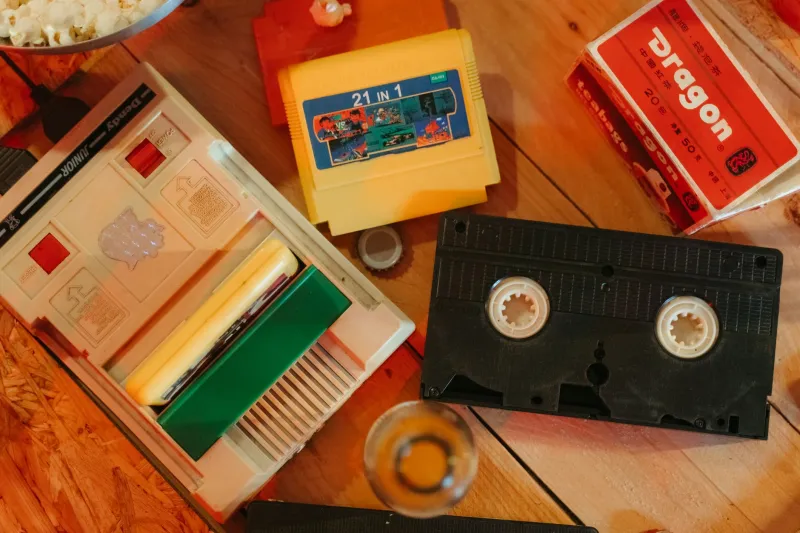
Let's get one thing straight: the Game Genie looked ridiculous. It was a chunky, elongated cartridge adapter that made your NES or Genesis look like it had swallowed a brick. You plugged your actual game into it, jammed the whole sandwich into your console, and then — if you typed in the right cryptic code from a dog-eared codebook — you could have infinite lives, infinite ammo, or the power to moonwalk through lava without breaking a sweat. It was glorious. It was also, according to Sega of America, a federal crime.
Well, sort of. The full story is messier, more interesting, and significantly more important than most people who grew up mashing those codes ever realized.
The Setup: A Toy Company, a Cheat Book, and a Very Angry Sega
Galoob — the toy company behind the Game Genie — wasn't exactly a shadowy piracy operation. They made toys. Bubble machines. Micro Machines. But in 1990, they released the Game Genie for the NES with Nintendo's reluctant blessing after a protracted negotiation. Sega, watching this unfold, had other plans. When Galoob moved to release a Genesis-compatible version, Sega sued, claiming the device created unauthorized derivative works of their copyrighted games by intercepting and altering the game's code in real time.
On paper, it sounds like a slam dunk for Sega. The Game Genie was changing the game's behavior. But the courts didn't see it that way — and that distinction turned out to matter enormously.
The Ninth Circuit Court of Appeals ruled in 1992 that the Game Genie did not create a fixed copy of any game. It was a real-time interception, not a reproduction. No new work was being stored. No piracy was occurring. The device was transformative in use but not infringing in function. Galoob won. The Game Genie lived. And somewhere in the legal architecture of American intellectual property law, a door cracked open that has never fully closed since.
Why This Wasn't Just About Cheating at Sonic
Here's where it gets genuinely fascinating. The Galoob ruling didn't exist in a vacuum — it arrived alongside and intertwined with another landmark case, Sega v. Accolade, decided the same year, which established that reverse engineering a console's code for the purpose of creating compatible software could qualify as fair use. Together, these cases formed a one-two punch that defined what third parties could legally do with commercial game platforms.
For the modding community, this was foundational. If altering a game's runtime behavior wasn't inherently infringing, then the entire philosophical basis of ROM hacking — changing how a game plays without distributing the original copyrighted code — had a legal footing, however narrow and contested.
"People don't realize how close we came to a totally different timeline," says one longtime ROM hacker who goes by the handle Blitzfader and has spent two decades creating English-language patches for Japanese Super Famicom games. "If the Game Genie case had gone the other way, the argument against any kind of game modification would have been much stronger from the start. The precedent mattered."
It's worth noting that the legal landscape for modding remains genuinely complicated — the DMCA, enacted in 1998, introduced new complications around circumventing copy protection, and courts have continued to wrestle with fan-made tools ever since. But the Galoob ruling gave the community a philosophical anchor: transformation and interoperability, done without reproducing protected code, deserve breathing room under the law.
The Modding Community's Complicated Inheritance
Ask anyone deep in the fan-translation or ROM-hacking scene and they'll tell you the same thing: the legal situation is always one aggressive corporate legal team away from getting ugly. Nintendo's periodic crackdowns on ROM hosting sites, Capcom's suits against fan game developers, and the ongoing battles over emulation have all demonstrated that the protections established in the early '90s have real limits.
But those protections exist. And they've enabled an entire creative ecosystem that, by any honest measure, has preserved and extended the cultural life of games that publishers long ago abandoned.
Consider what the fan community has done with games that would otherwise be lost: complete English translations of games that never left Japan, accessibility patches that add colorblind modes to 30-year-old titles, bug fixes that correct errors the original developers never had time to address. These aren't acts of piracy. They're acts of love — and arguably, of archival stewardship.
"The Game Genie was just a cheat device to most kids," says Mireille Santos, a digital preservation researcher who has written about gaming's legal history. "But what it represented legally was the idea that games aren't sealed objects. They're interactive, malleable, and the people who play them have some relationship to what those games become in their hands. That's a radical idea, and it's still being fought over."
The Cheat Code That Kept Giving
There's something almost poetic about the fact that a device literally designed to help kids break the rules ended up breaking legal ground in ways that still benefit creators today. The Game Genie wasn't trying to be a civil liberties icon. It was trying to help a ten-year-old finally beat Battletoads.
But the law, like a good video game, doesn't always reward you for the reasons you expected. Sometimes you stumble into a secret room just by walking through the right wall.
The modern indie game scene, the speedrunning community, the fan translation archives, the accessibility modders — all of them are operating in a legal space that was, in some small but measurable way, carved out by a gray plastic brick that made your Genesis look like it needed a neck brace.
Next time you load up a fan-translated RPG or watch a streamer break a game in half with a glitch exploit, maybe pour one out for Galoob. They didn't know what they were doing. But it worked out pretty well for the rest of us.
Got a favorite Game Genie code you still remember by heart? Drop it in the comments — extra points if it's for a game nobody else admits to playing.