Gone But Not Forgotten: The Stubborn, Glorious Afterlife of LaserDisc, HD-DVD, and Other 'Dead' Formats
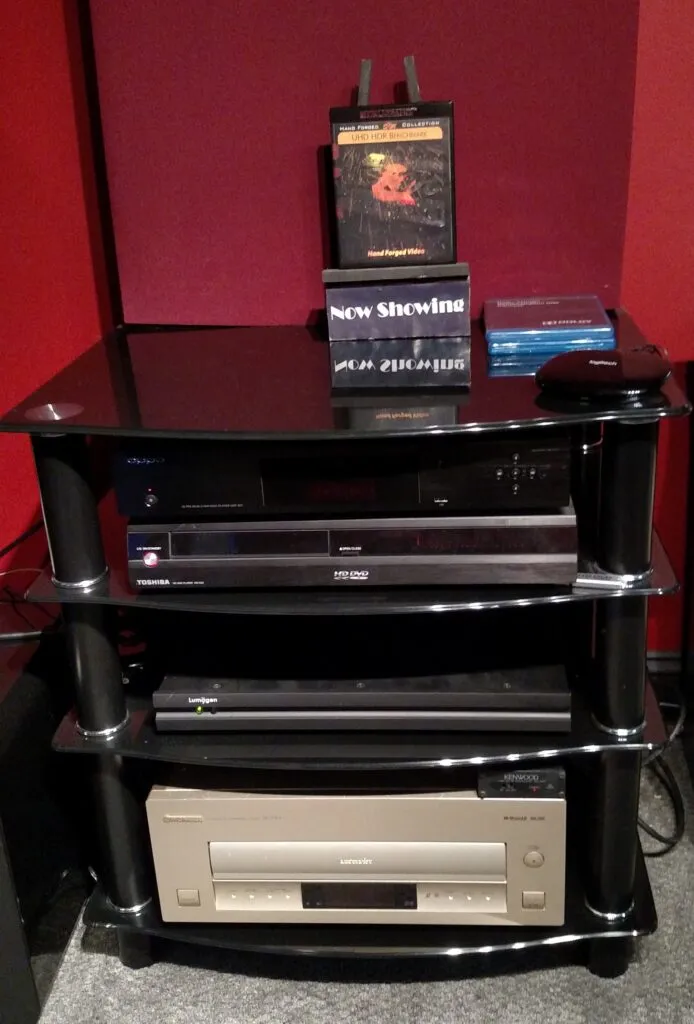
Photo: LaserDisc player vintage home theater collection retro electronics shelf, via www.highdefdigest.com
In 2008, Toshiba threw in the towel on HD-DVD and the format war was officially over. Blu-ray won. The tech press wrote the obituaries. Retailers cleared the shelves. And somewhere in suburban Denver, a guy named Phil quietly bought every HD-DVD disc his local Best Buy had left, at five dollars a pop, and loaded them into the back of his Honda Accord with the serene confidence of a man who understood something the rest of the world didn't.
Phil now owns over 800 HD-DVD titles, three working players, and a quiet smile he deploys whenever someone tells him the format is dead. "Dead to whom?" he asks, genuinely curious. "It plays fine. The picture's great. I paid almost nothing for any of it."
This is the essential spirit of the dead-media collector: cheerful, contrarian, and almost always right in ways that are annoying to acknowledge.
What Makes a Format 'Dead,' Anyway?
The consumer technology industry has a very specific definition of dead: a format is dead when it stops generating revenue for the companies that created it. By that definition, LaserDisc died around 2001, HD-DVD in 2008, Betamax in 2002, and MiniDisc somewhere in the mid-2000s depending on which market you're measuring.
By any other definition — whether people still use it, whether it still works, whether a community still exists around it — the picture is considerably more complicated.
LaserDisc is perhaps the most striking case study. Introduced in the US in 1978 and never capturing more than a niche market share against VHS, it was nonetheless the format of choice for serious home theater enthusiasts through the 1980s and much of the 1990s. The discs were enormous — twelve inches across, like vinyl records for movies — and the players were heavy, expensive, and required you to flip the disc halfway through longer films. In exchange, you got picture and audio quality that VHS simply couldn't touch.
When DVD arrived, LaserDisc's days were numbered. But the format's community didn't dissolve — it calcified, in the best possible way, into a dedicated subculture of collectors, archivists, and enthusiasts who recognized that certain LaserDisc releases contained content that had never been — and in some cases, still hasn't been — transferred to any subsequent format.
The Content That Won't Die
This is the part that surprises people who assume dead formats are just inferior versions of things you can get elsewhere: some of them contain things you genuinely cannot get anywhere else.
LaserDisc releases of certain films include director's commentary tracks, alternate cuts, and supplemental materials that were never ported to DVD or Blu-ray. The original theatrical version of the Star Wars trilogy — before George Lucas's infamous special edition alterations — exists in its cleanest home-video form on LaserDisc, a fact that has made those specific discs objects of near-religious reverence in certain corners of the internet.
HD-DVD, similarly, has a handful of exclusive releases and bonus features that never made the jump to Blu-ray. The format's early adoption of interactive features — picture-in-picture commentary, web connectivity — produced some genuinely interesting bonus content that Blu-ray equivalents either skipped or implemented differently.
Rachel, a film archivist based in Los Angeles who maintains an active LaserDisc player alongside her modern home theater setup, puts it plainly: "I'm not running LaserDisc for nostalgia. I'm running it because there are transfers on those discs that don't exist in any better format. This is just the best way to watch certain movies."
The Repair Economy No One Planned For
Keeping these formats alive requires something the original manufacturers never anticipated: a self-organized repair and parts ecosystem built entirely by enthusiasts.
LaserDisc players are notoriously maintenance-intensive. The laser assemblies degrade. The belts dry out and snap. The mechanisms that flip or eject the enormous discs develop opinions about whether they feel like cooperating on any given day. Pioneer, the dominant LaserDisc player manufacturer, is not exactly running a robust after-sales support operation for thirty-year-old hardware.
So collectors fix them themselves — or find the small number of technicians who specialize in vintage optical media repair. Online communities share service manuals, source replacement laser diodes from surplus electronics suppliers, and document repair procedures with a thoroughness that would impress any corporate technical writing department. It's open-source hardware support, decades before that phrase existed.
HD-DVD players are in better shape mechanically — they're newer, and the failure modes are less exotic — but the community around them has still developed its own support infrastructure, including firmware modifications and workarounds for players that have developed regional lockout quirks.
"The community does what the company stopped doing," says Marcus, a vintage electronics technician in Atlanta who services LaserDisc players as a side business that has, in recent years, become considerably less of a side business. "Once you understand that, the whole thing makes sense. The format isn't dead. The corporate support is dead. Those are different things."
Cult Status vs. Disposable Tech: Why Some Formats Survive
Not every failed format gets a second life. DIVX — the pay-per-view disc format launched by Circuit City in 1998 that required a phone line connection to authorize playback — is genuinely, comprehensively dead. Almost nobody misses it. The format combined the worst aspects of physical media and digital rights management in a way that managed to alienate consumers almost immediately.
The formats that develop cult status tend to share certain characteristics: they offered something genuinely superior in at least one dimension (picture quality, audio fidelity, build quality), they were adopted by enthusiasts who cared deeply about that dimension, and they left behind a library of content with at least some unique value.
LaserDisc checks all three boxes. HD-DVD, more modestly, checks at least two. Even MiniDisc — Sony's attempt at a digital portable audio format that lost to the MP3 player — has a devoted community built partly around its genuinely excellent recording quality and partly around the format's aesthetic appeal, which turns out to be considerable.
The Streaming Paradox
There's a delicious irony operating in the background of all of this: the rise of streaming, which was supposed to make physical media permanently obsolete, has actually strengthened the case for dead-format collecting.
Streaming libraries are impermanent. Licensing deals expire, titles disappear, and the version of a film available on a given platform may not be the version you want to watch. Physical media — even twelve-inch physical media that requires you to flip it over halfway through Lawrence of Arabia — is permanent in a way that a streaming license fundamentally is not.
Phil in Denver understands this. Rachel in Los Angeles understands this. The LaserDisc communities on Facebook and Discord, the HD-DVD forums, the MiniDisc subreddits — they all understand this, with a clarity that the broader culture is only beginning to catch up to.
Dead formats, it turns out, are just formats that stopped being convenient for corporations. For the people who love them, they never stopped working. And in the end, working is all that really matters.