Puff Piece: The Weird Science Behind Why Blowing Into NES Cartridges Actually Did Something
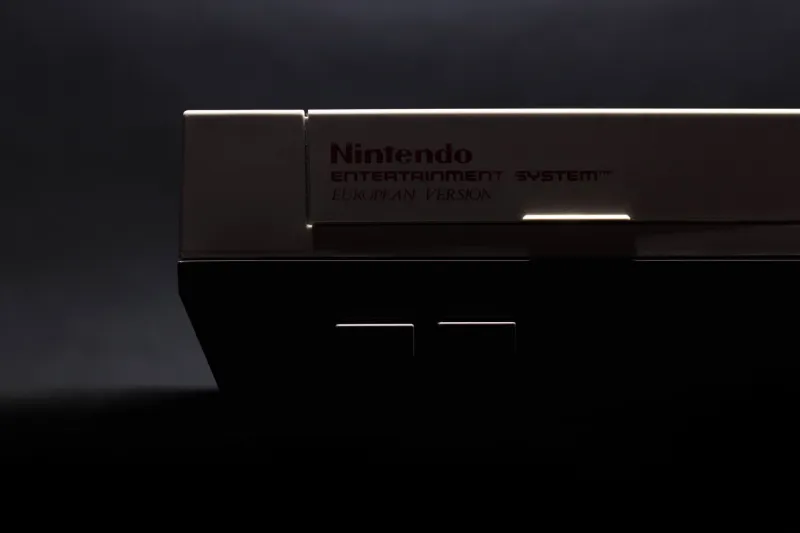
If you grew up in the late '80s or early '90s with a Nintendo Entertainment System, you had a move. Everyone had the move. The screen would glitch, the game would freeze, or — worst of all — you'd get that blinking red power light of doom, and without even thinking about it, you'd eject the cartridge, raise it to your lips, and blow. Hard. Like you were trying to inflate a bouncy castle with your lungs alone.
It worked. Sometimes. Enough times that the ritual became gospel, passed down from older siblings to younger ones like sacred knowledge. Nobody questioned it. Nobody needed to. The game booted up, and that was enough.
Decades later, with the benefit of teardown videos, electrical engineering forums, and the kind of obsessive retrotech archaeology that RetroBits was basically built for, we finally have a full picture of what was actually going on inside that gray plastic slab — and the answer is simultaneously more interesting and more embarrassing than anyone expected.
The NES's Dirty Little Secret: The Zero Insertion Force Connector
To understand the great cartridge blowing myth, you have to understand why the NES was such a mechanical disaster in the first place. And for that, you have to blame a design decision made for the best of reasons that aged like a gas station sushi roll.
Nintendo designed the NES's cartridge connector — officially called the 72-pin connector — using what's known as a Zero Insertion Force, or ZIF, mechanism. The idea was elegant: instead of requiring users to jam cartridges into a slot with brute force (which would wear out contacts quickly), the NES used a front-loading tray that let the cartridge slide in gently before locking down onto the connector pins. Smooth. Sophisticated. Very VCR-chic for 1985.
The problem? Those 72 pins were made from a phosphor bronze alloy, and they were designed to grip the cartridge's gold-plated contacts with just enough tension to maintain a solid electrical connection. Over time — and we mean months, not years — those pins lost their springiness. They bent. They flattened. They gave up, basically, in the same way the rest of us give up on New Year's resolutions by February.
A worn-out pin connector meant intermittent contact. Intermittent contact meant corrupted data signals. Corrupted data signals meant your copy of Super Mario Bros. 3 suddenly thought it was abstract art.
So What Did Blowing Actually Do?
Here's where it gets interesting — and where a generation of parents telling their kids to stop "spitting on the electronics" were both right and wrong simultaneously.
The act of removing and reinserting the cartridge was doing most of the heavy lifting. Every time you pulled that cartridge out and shoved it back in, the gold contacts on the cartridge edge were physically scrubbing against the 72 pins. That friction — even microscopic amounts of it — was clearing away oxidation, dust, and whatever mystery debris had accumulated on the contact surfaces. It was accidental cleaning. Dumb luck disguised as troubleshooting.
The blowing part? Marginally useful at best. A focused puff of air could dislodge loose dust particles sitting on the contacts or in the cartridge slot. In genuinely dusty environments — say, a carpeted suburban bedroom in 1989 — that wasn't nothing. Dust is a legitimate enemy of electrical connections, and physically removing it with air pressure is a real thing that real technicians do with canned air.
But here's the kicker that Nintendo's own engineers have since confirmed, and that modern retro restorers repeat like a mantra: human breath is bad for electronics. Your mouth produces warm, moist air loaded with microscopic water droplets and trace amounts of CO2. Blow enough of that onto metal contacts over enough years, and you're accelerating the very oxidation problem you're trying to solve. The ritual that saved your gaming session was, in slow motion, making the long-term problem worse.
You were essentially treating a leaky faucet by drinking the water.
The Oxidation Arms Race
Oxidation is the real villain of this story, and it's worth understanding why it hit the NES so hard. Cartridge contacts were gold-plated specifically because gold resists oxidation beautifully — it's one of the reasons the stuff is so valuable. But gold plating is thin, and the underlying copper or nickel alloy beneath it is far less noble. Any scratch, wear point, or manufacturing imperfection in the plating becomes an oxidation entry point.
The NES connector pins, meanwhile, were phosphor bronze — a material chosen for its spring properties, not its corrosion resistance. Repeated insertions wore the gold off cartridge contacts. Humid environments (hello, every basement game room in America) accelerated oxidation on the exposed metal beneath. The result was a system that was practically designed to degrade, and degrade it did, usually right around the time you were three worlds deep into Mega Man 2 and had no save file.
Modern retro collectors who crack open old NES cartridges frequently find contacts that look like they've been through a small war. Green oxidation, scratched gold plating, and in extreme cases, actual corrosion pitting. The recommended fix today is isopropyl alcohol (90% or higher) applied with a cotton swab — a solution that actually addresses the chemistry instead of just temporarily bullying the contacts into cooperation.
A Design Lesson Dressed as Nostalgia
What makes the NES cartridge saga so fascinating from a retro tech perspective is how perfectly it illustrates the gap between engineering intent and real-world use. Nintendo's engineers designed a system meant to be gentle and consumer-friendly. Users, faced with a system that kept failing them, invented a workaround that was partly effective, partly theatrical, and ultimately a little self-defeating.
And yet — and this is the part that deserves some genuine appreciation — it worked well enough. Not because blowing into cartridges was brilliant engineering. But because human beings are remarkably good at developing functional rituals around broken systems. The remove-blow-reinsert sequence was a real troubleshooting protocol, even if the middle step was mostly vibes.
The NES survived its own connector catastrophe because players were stubborn enough to keep trying until it worked. That's not a great hardware design philosophy. It is, however, a pretty solid description of being a Nintendo fan in general.
The Legacy of the Blow
Today, the cartridge blow is pure cultural shorthand. Slap it on a T-shirt, put it in a meme, use it as a punchline — everyone who lived through the NES era immediately knows what you mean. It's the kind of shared experience that doesn't need explanation, like the three-finger salute of Ctrl+Alt+Delete or the specific panic of a rewinding VHS tape.
But now you know the full story. The connector was flawed from the jump. The blowing helped a little, hurt a little, and became legend for reasons that have more to do with human pattern recognition than actual physics. And somewhere in a landfill, or a collector's carefully climate-controlled storage unit, there's a 72-pin connector that has seen things.
Next time you spot an old NES at a thrift store, pick it up. Give it the respect it deserves. And maybe — just maybe — blow on the cartridge one more time. Not because it works. Because some rituals are worth keeping.