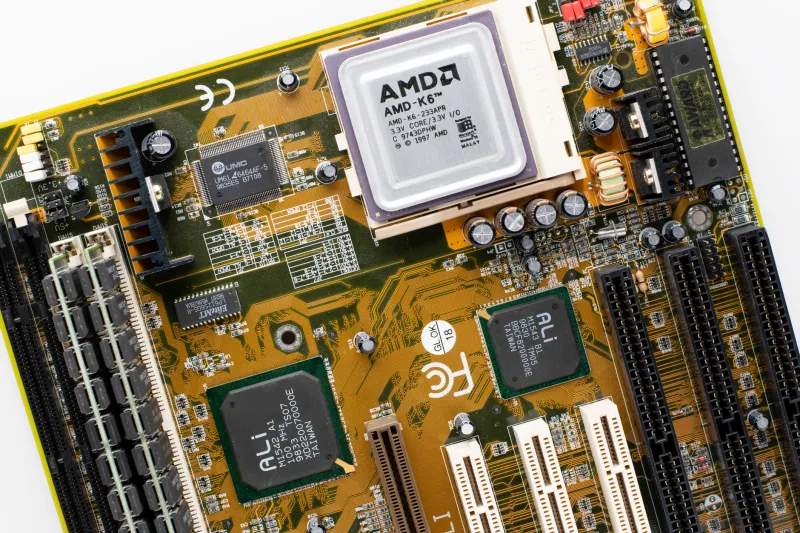
Eau de Boot Sequence: Inside the Booming Business of Bottled Tech Nostalgia
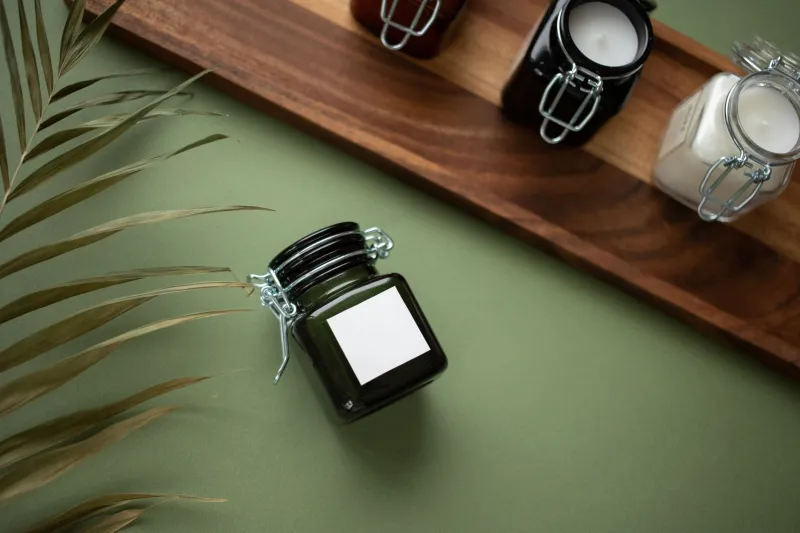
Close your eyes for a second. Think about sitting in front of a warm CRT monitor in 1993, the faint electrical hum in the air, the specific plasticky-dusty-warm smell of a computer that has been on since breakfast. Maybe there's a floppy disk nearby. Maybe the carpet is aggressively patterned. Maybe someone in the house is using the phone, which means the internet is dead.
Now imagine someone put that smell in a candle and sold it for $22 on Etsy.
They did. It's called "CRT Warmth." It has 847 five-star reviews. And it is, by any reasonable measure, completely insane — and also kind of brilliant.
Welcome to the olfactory nostalgia economy, where Gen X and millennial consumers are spending real, non-ironic money to literally smell their childhoods, and a scrappy collection of indie creators are cashing in on one of the most unexpected product categories of the decade.
The Nose Knows (And the Nose Remembers)
Before we get into the entrepreneurial side of this, it's worth understanding why this works — because it really, genuinely works, in a way that feels almost unfair.
Smell is the sense most directly wired to memory and emotion. The olfactory bulb, which processes scent, has direct connections to the amygdala and hippocampus — the brain's emotional core and memory center. This is why a whiff of sunscreen can teleport you to a 1991 family vacation more efficiently than any photograph. Scientists call this "odor-evoked autobiographical memory." Marketers call it a gold mine.
For a generation that grew up with very specific, very distinctive technological smells — the ozone-and-hot-plastic of a running CRT, the chemical newness of a fresh game cartridge, the particular musk of a computer store circa 1995 — these scent profiles are tied to some of the most vivid memories they have. And someone figured out how to put them in a jar.
The Creators: From Side Hustle to Smell Empire
Jamie, who runs a small candle operation called Bit & Wick out of her apartment in Denver, Colorado, stumbled into the retro tech scent niche almost by accident.
"I was making candles as a hobby and I made one for my husband that was supposed to smell like his dad's old workshop — motor oil, sawdust, a little bit of old electronics," she explained. "I posted a photo on Reddit and within 48 hours I had 200 people asking where to buy it. I wasn't even selling them yet."
That was three years ago. Today, Bit & Wick's "New Computer Smell" candle — a blend of fresh plastic, a hint of solder, and what Jamie describes as "that specific air from inside a cardboard box with foam inserts" — is her top seller, moving several hundred units a month. Her "Cartridge Blow" candle, which replicates the dusty-warm smell of a freshly exhaled NES cartridge (yes, really), has a six-week waitlist.
"I never expected this," Jamie said, laughing. "I thought I was making weird nerd candles for like twelve people. Turns out there are a lot more than twelve of us."
Jamie is not alone in the space. A quick scan of Etsy reveals dozens of small makers selling similar products: "Dial-Up Modem" room sprays, "Arcade Carpet" wax melts, "VHS Rewind" pillar candles, and at least three separate products claiming to capture the smell of a Blockbuster Video store (a scent profile that apparently involves blue plastic, slightly stale popcorn, and existential dread about late fees).
The Science of Faking a Smell From 1987
Creating these scent profiles is more technically demanding than it sounds. Fragrance development is a real discipline, and accurately replicating something as specific as "the inside of a Game Boy Color" requires a working knowledge of aromatic chemistry.
Most indie creators work with fragrance oil suppliers to build custom blends. The "warm electronics" base note that anchors many retro tech scents typically combines elements like musty wood, light smoke, and a synthetic plastic accord. Layered on top are modifiers — a hint of graphite for "keyboard smell," a touch of rubber for "controller grip," traces of vanilla and amber for the sweet-warm quality of old CRT phosphors.
None of these smell exactly like the thing they're supposed to evoke, and that's almost the point. They smell like the memory of the thing. They're impressionistic rather than photorealistic. And apparently, that's exactly what people want.
"If I made a candle that smelled exactly like a real CRT, it would probably smell like burning dust and mild electrical concern," Jamie noted. "That's not a great home fragrance. I'm selling the feeling of a CRT. There's a difference."
The Merch Goes Wider
Candles are just the beginning. The retro tech nostalgia merchandise space has expanded to include air fresheners shaped like floppy disks, car scent diffusers styled after old cartridge labels, and at least one company selling a "New Game Smell" spray designed to be applied to modern game cases to simulate the chemical magic of opening a fresh SNES cartridge in 1992.
There are also wax melt collections organized by console era ("The NES Years," "SEGA Saturday Morning"), gift sets themed around specific computers (a Commodore 64 set, an Apple IIe collection), and a particularly ambitious Kickstarter project attempting to recreate the full sensory environment of a 1980s computer lab — including a custom scent diffuser that cycles through "chalk dust," "dot matrix printer," and "warm Apple II" on a timer.
It raised $47,000. Against a $5,000 goal.
What This Actually Tells Us
It would be easy to dismiss all of this as peak millennial commodification — the final stage of nostalgia capitalism, where every childhood memory gets a SKU and a free-shipping threshold. And maybe that's partly true.
But there's something more interesting happening here. For a generation whose cultural touchstones are increasingly intangible — streaming libraries that can vanish overnight, digital games that exist only as license agreements, social media memories stored on servers owned by corporations — there's a real hunger for physical connection to the past. Something you can hold. Something you can smell.
A candle that smells like a warm CRT is, in its weird little way, a piece of hardware. It occupies space. It can't be patched or delisted or discontinued without notice. It just sits on your shelf and smells like 1993 until it's gone.
Which, when you think about it, is more permanence than most of us have gotten from our digital lives lately.
Jamie is already working on her next scent. "I'm thinking 'Computer Store, 1996,'" she said. "Carpet, plastic, the specific smell of boxed software. Maybe a little bit of that RadioShack energy."
We told her we'd take two.