Spreadsheets, Shelves, and Sanity: The Collectors Who Catalog Their Retro Tech Like It's the Smithsonian

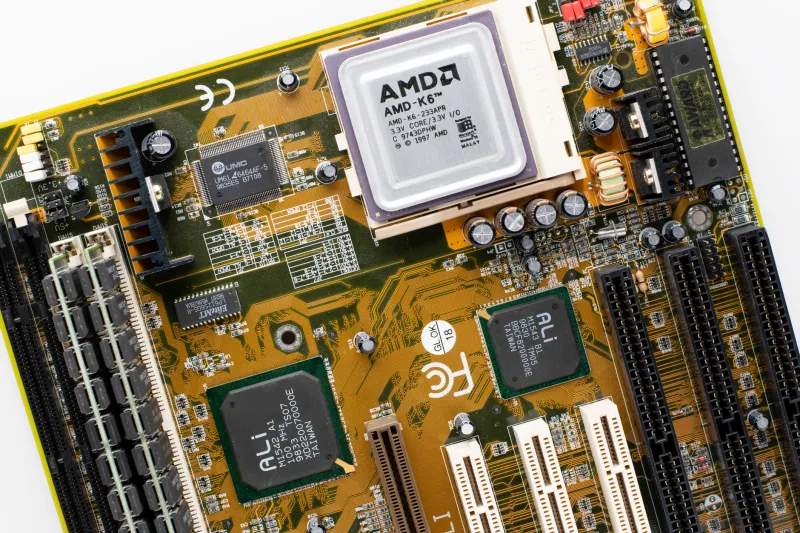
Photo: RockosModernLifeFan848, CC0, via Wikimedia Commons
Let's be honest. Most of us started with a shoebox.
A battered Reebok box stuffed with Game Boy cartridges, a tangle of composite cables, and one controller with a sticky A button whose origin you'd rather not investigate. That was the collection. That was the system. You knew what you had because you could see it, touch it, and occasionally sit on it by accident.
That era is over.
Across the United States, a growing number of retro tech enthusiasts have graduated from shoebox chaos to something that would make a museum curator weep with professional jealousy. We're talking color-coded spreadsheets. Custom acrylic shelving with LED backlighting calibrated to match the original hardware's era. Humidity-controlled storage for boxed games. Condition-grading rubrics borrowed wholesale from comic book collecting. And, yes, more than a few people who have assigned their Commodore 64 an official accession number.
Welcome to the Great Defrag — the moment the retro collecting hobby stopped being about accumulation and started being about curation.
From Pile to Portfolio
Dave Kowalski, a 41-year-old IT manager from Columbus, Ohio, spent fifteen years building what he casually describes as "a pretty solid Atari collection." Then, during the pandemic, he made the mistake of trying to count it.
"I genuinely did not know what I owned," he says, laughing in the specific way of a man who has made peace with his own chaos. "I had duplicates. I had games I'd bought twice because I forgot I had them. I had hardware I couldn't identify without a Google search. It was a disaster."
What followed was six months of methodical cataloging using a custom Google Sheets database he built himself — columns for title, platform, region, condition, box presence, manual presence, purchase price, estimated current value, and storage location. He photographed every item. He cross-referenced against the Atari Age database. He assigned physical location codes to his shelving units.
"My wife thought I'd lost my mind," he says. "But now I can tell you in thirty seconds exactly what I own, where it is, and what it's worth. That feels incredible."
Dave is not an outlier. He's the new normal.
The Psychology of the Perfect Shelf
There's something happening here that goes deeper than tidiness. Therapists who work with collectors — yes, that's a real specialty — note that the impulse to meticulously organize physical objects often intensifies during periods of ambient anxiety. And if the last several years have taught us anything, it's that ambient anxiety is basically America's new background radiation.
In a world where your music library is a server farm in Oregon, your photos are "in the cloud" somewhere, and your entire movie collection can vanish the moment a streaming service loses a licensing deal, there is something profoundly comforting about a physical object you can hold, catalog, and put exactly where you want it. You own it. It exists. It is yours in a way that your Netflix queue fundamentally is not.
Retro tech collecting scratches that itch with particular ferocity, because vintage hardware carries the additional weight of personal history. That's not just a Super Nintendo. That's your Super Nintendo — or one just like it — from a specific Saturday morning in 1993 when nothing in the world was more important than getting past Bowser's Castle.
Organizing it isn't hoarding. It's archaeology. It's preservation. It's control.
The Tools of the Trade
The community has developed an impressive ecosystem of tools to support this obsession. CLZ Games and VGPC (Video Game Price Charting) are collector favorites for cataloging and valuation. The RetroRGB community maintains exhaustive technical documentation on hardware revisions. Discord servers dedicated to specific platforms host thousands of members who will debate — at length, with citations — the correct way to store a CIB (Complete In Box) NES cartridge.
On the physical side, the display arms race has gotten genuinely spectacular. Collectors share shelf builds on Reddit and YouTube with the same energy that home renovation influencers bring to kitchen remodels. Wall-mounted pegboard systems with custom 3D-printed holders. Ikea Kallax units modified with internal lighting and acrylic doors. Temperature-controlled display cases originally designed for sports memorabilia, repurposed for boxed Sega Saturn games.
Sarah Chen, a 38-year-old graphic designer from Portland who collects vintage Apple hardware, spent three months designing a custom display wall for her collection that she describes as "somewhere between an Apple Store and a time capsule."
"Every machine has a little printed card with the year it was made, its original retail price, and a one-line note about why it matters," she explains. "It's not just decoration. It's context. I want anyone who walks into my office to understand why a beige plastic box from 1984 is actually kind of a miracle."
Purists, Pragmatists, and the Great Database Debate
Naturally, a community this organized has opinions about how to organize. The spreadsheet-versus-dedicated-app debate alone could fill a small conference. Some collectors insist on physical card catalogs — yes, actual index cards, in actual boxes — on the grounds that a database you can't access without electricity is a liability. Others have built elaborate home server setups with full photographic archives, cross-linked to purchase receipts and provenance documentation.
Then there's the condition grading wars, which make the spreadsheet debate look like a gentle disagreement. Grading a cartridge as "Very Good" versus "Excellent" can mean a significant difference in cataloged value, and the community has roughly as many grading standards as it has members. Wata Games and Heritage Auctions brought professional grading to the high end of the market, but plenty of collectors regard third-party grading as overkill for anything they're not planning to sell.
"I grade everything myself, on a ten-point scale I made up," admits Marcus Williams, a 44-year-old teacher from Atlanta who collects Genesis games. "Is it objective? Probably not. But it's consistent, which is what matters for a personal archive."
Why It Matters Beyond the Shelf
Here's the thing nobody says out loud but everybody feels: these collections are history. Not in a grandiose way, but in the very literal sense that physical hardware is the only surviving record of what computing and gaming actually felt like before everything went digital and frictionless and subscription-based.
Emulation is wonderful. Digital archives are important. But there is information encoded in the weight of a cartridge, the resistance of a joystick, the specific shade of yellowed plastic on a 1986 Atari 800XL that no ROM file can capture. When collectors build databases and photograph their holdings and document provenance, they're doing something that institutional archives largely haven't gotten around to yet.
They're preserving the texture of a moment in time.
So yes, maybe Dave's Atari spreadsheet is a little obsessive. Maybe Sarah's display wall is slightly over-engineered. Maybe the hours these people spend cataloging their collections could be spent doing something more conventionally productive.
But the next time you want to understand what it felt like to grow up in the golden age of home computing, you're going to be very glad somebody kept the receipts.